Event 1
Brick Betrays the Gang and Assists the Police
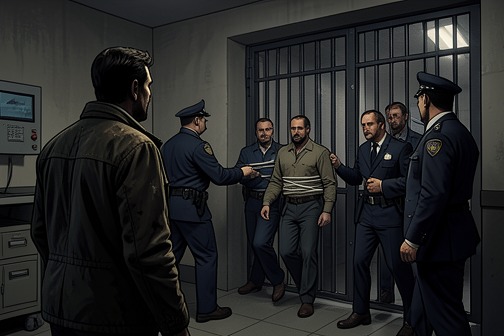
[Jensen Brick McCall](entity:character-recall-character-jensen-brick-mccall-7d329989a38d)’s betrayal of his gang becomes an irreversible break: after secretly helping [Detective Dartes](entity:character-recall-character-detective-dartes-365e2afcf3b0) build a case, he watches federal agents arrest twenty-two men, including their leader. The raid gives him immunity and a way out of Syracuse, but its apparent victory is shadowed by the deaths of [Chyna](entity:character-recall-character-chyna-ea72f7a5cb0f) and [Mortez Payne](entity:character-recall-character-mortez-payne-a306fe376055) and by Jensen’s conviction that he failed to protect them. Recalled as an event from the previous day, it is both a law-enforcement operation and the moment his former, violent family is taken from him.
## Background and Stakes
By the time the authorities move in, Jensen has already spent weeks meeting with Detective Dartes and his partner. He supplies details about crimes committed by the gang, along with videos and audio recordings. The cooperation is deliberate and sustained: Jensen does not merely witness the raid but has helped prepare the case that makes it possible.
The stakes are personal as well as criminal. The gang members are described as his brothers, a makeshift family formed amid the instability of his life. Yet Jensen understands that loyalty to them has become inseparable from violence. Before turning against them, he had paralyzed men for disrespecting the gang and had shot and killed men before his twenty-first birthday. His decision to cooperate therefore comes from within the gang’s world, not from the position of an uninvolved observer.
His account ties the decision especially to Chyna and her son, Mortez Payne. Jensen believes the gang killed them because it suspected Chyna of speaking to federal agents, although he identifies his own betrayal as the act that brought danger onto them. He also associates his choice with [Grace McCall](entity:character-recall-character-grace-mccall-73a0f36b2dc8). The raid is consequently driven by grief and responsibility as well as by the practical prospect of escaping prosecution; Jensen sees the operation as a response to losses he believes he helped cause.
## The Predawn Raid
The arrest begins at five in the morning, while heavy snow falls. Jensen stands apart as agents from the [Drug Enforcement Administration](entity:organization-recall-organization-drug-enforcement-85b22b2a9f98) and the [Federal Bureau of Investigation](entity:organization-recall-organization-federal-bureau-o-f1c5664278d2) batter down the door. The wind cuts across his face; his eyes water, and the moisture freezes on him. Inside, breakfast sausage and baking bread mingle with the smell of marijuana being smoked, an ordinary domestic scene abruptly exposed to a heavily armed raid.
The men are on their knees with their hands behind their heads and guns pointed at them. When they try to scatter, officers seize them, force them to the ground, and hold weapons to their heads. Jensen watches the gang’s attempted escape collapse into a series of arrests. The sweep captures twenty-two men, including the leader, and reveals drugs, weapons, and money throughout the premises.
The scale of the seizure makes the consequences concrete. Detectives bring out three boxes of weapons and 4C iced tea cans filled with heroin, cocaine, and marijuana. Each man is read his rights, shackled, and put into a van. Jensen does not describe a narrow arrest of one suspect: the operation dismantles the group around him, taking its members and the physical evidence of their crimes at once.
## Cooperation, Betrayal, and Loss
Jensen calls his role a betrayal and portrays himself as having pretended loyalty while preparing the gang to be arrested. His weeks of disclosure—details, videos, and audio recordings—turn that pretense into a working relationship with Detective Dartes. The raid is the visible payoff for information gathered beforehand, not a sudden change of allegiance made at the door.
The contrast between the gang’s fate and Jensen’s outcome is stark. The arrested men face the consequences of the case against them; Jensen’s stated prize is immunity from ever spending a day in jail. Detective Dartes also gives him a bus ticket out of Syracuse. In a later exchange, Dartes explains that he could have jailed Jensen earlier, but says he owed Grace McCall and believed Jensen deserved a life beyond a cell. That decision makes Jensen’s escape possible without making the moral costs of his past disappear.
For Jensen, the raid therefore does not settle the question of responsibility. He believes Chyna was blamed for informing, and that she and Mortez Payne were murdered as a result of his own act of treason. He condemns himself for failing to save them. The police operation punishes the gang’s crimes, but it cannot reverse their deaths or resolve Jensen’s sense that his silence and choices helped expose them to danger.
## Departure and Significance
As snow covers the scene, the arrested men respond in different ways: some shiver with anger, younger members wonder who informed on them and plot revenge, and others contemplate the lives they may have lost to prison. Jensen watches the men being taken away one by one and recognizes that another makeshift family has vanished from his life. His comparison of this loss to the disappearance of foster families places the gang within a repeated pattern of attachment and separation, even though this family was also bound to crime.
The bus ticket grants physical freedom, not emotional release. Jensen leaves with a duffel bag containing what he owns, but describes his mind as still captive, burdened by guilt over Chyna, Mortez Payne, and Grace McCall. He carries those deaths as an obligation: to seek justice for Chyna and to honor the people he believes he failed. The raid thus turns a criminal informant into a man attempting to act against the violence around him, while refusing the easy conclusion that cooperation with police can erase his complicity. Its decisive shift is from gang loyalty to testimony and escape; its unresolved consequence is the guilt that travels with him beyond Syracuse.
Event 2
Chyna and Her Son Are Murdered by the Gang
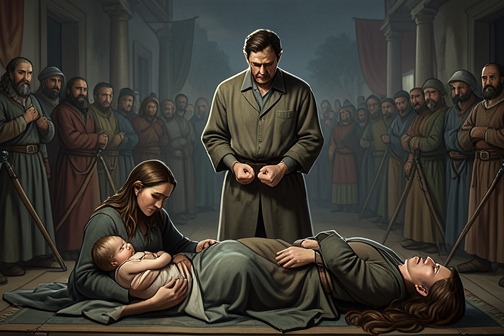
[Chyna](entity:character-recall-character-chyna-ea72f7a5cb0f) and her son, [Mortez Payne](entity:character-recall-character-mortez-payne-a306fe376055), are murdered by gang members after Chyna is suspected of informing on them. The killings become a defining trauma for [Jensen Brick McCall](entity:character-recall-character-jensen-brick-mccall-7d329989a38d): he sees the bodies, recognizes his own part in the danger surrounding them, and carries the failure to intervene as a burden that shapes his decision to seek justice and leave Syracuse.
## Causes and Background
Chyna and Jensen Brick McCall had formed a sibling-like bond in the Parkersburg home where they first met. Their earliest connection was forged in danger: they fought off Chyna’s sons when they tried to sexually assault them. Chyna came to regard Jensen as a big brother, while he wanted a closer relationship; she maintained that friendship was safer than becoming lovers.
The gang’s suspicions were tied to informing and betrayal. Jensen later understood the killings as punishment for his own act of treason, while Chyna told the gang that she had spoken to federal agents too. He had warned her that her involvement with Trey, whom he regarded as an enemy, could bring deadly consequences. Her breach of the gang’s code and the suspicion that she had cooperated with authorities placed her in danger, but Jensen’s warnings did not prevent the attack.
## The Attack and Deaths
Gang members took Chyna to the back of the projects. There, they raped and tortured her, shot Mortez in the face, and killed Chyna by inserting a hot curling iron into her womb. The account presents the violence not as a distant report but as the event Jensen believes he failed to stop: Chyna and her child were punished in the same episode, and he connects their deaths to the peril created by his own betrayal.
Before she died, Chyna told Jensen that she had also informed on the gang and had been caught. She rejected his attempt to make himself responsible for her fate, telling him that he was meant to get out of the neighborhood and asking him to promise he would become somebody great. Her words make the scene a final act of care between friends: even while facing death, she urges him toward a future she believes is unavailable to her.
## Jensen’s Witness and Response
Jensen held Chyna’s cold body and her son in his arms. Mortez was still clutching the Transformer Jensen had given him for [Christmas](entity:time-recall-time-0cffe7da2c4d). Jensen held and rocked them, then closed their eyes. He describes fear and inaction as part of his guilt: he had stood among the people who harmed them and had not managed to save either of them.
The next day, Jensen went to [Detective Dartes](entity:character-recall-character-detective-dartes-365e2afcf3b0) and reported the crimes. He later worked with Dartes and his partner for weeks, providing details, videos, and audio recordings of criminal activity. In exchange, he received immunity from jail and a bus ticket out of Syracuse. The cooperation brought consequences for the gang, but it could not undo the deaths that had prompted him to speak.
## Aftermath and Significance
Jensen’s grief is bound to his sense of responsibility. He says that Chyna’s death was because of him and that his failure to act was his greatest crime as a free man. He also remembers her as the person who had remained loyal and loved him as he was, especially after [Grace McCall](entity:character-recall-character-grace-mccall-73a0f36b2dc8) died. Her loss therefore compounds his earlier bereavement and deepens his feeling that he has no secure home or family.
The murders turn Jensen’s guilt into a stated mission: he seeks justice for Chyna and Mortez, and resolves to try to save another woman rather than remain silent as he believes he did before. Chyna’s final request that he survive and become someone great stands against the gang’s violence and the fatalism of their neighborhood. Her death is both the cost of Jensen’s perceived treason and the event that propels him toward testimony, departure, and an attempt at redemption.
Event 3
Janae and Robert Walters' Affair Is Exposed

The exposure of [Janae Morrison](entity:character-recall-character-janae-morrison-a60d65b6df7c) and [Robert Walters](entity:character-recall-character-robert-walters-507d3e0b0047)’ affair becomes a contest over who will be believed: Walters uses his public standing to deny their relationship, while Janae preserves evidence that can overturn his account. The scandal first reaches the public through news coverage that frames her as both a drug user and a woman whose claims about a prominent man can be dismissed.
## Public Exposure and Competing Accounts
Janae sees herself on [WIVB News](entity:organization-recall-organization-wivb-news-2009505187dc) beside Councilman Robert Walters after coverage links an alleged affair with a drug bust. The report shows her naked with her nose in a cocaine jar and revisits her troubled past and addiction. Rather than presenting the relationship as a question requiring investigation, the coverage makes her history part of the case against her credibility.
Walters answers the allegations at a press conference. He describes his connection to Janae as business, centered on her artwork, and portrays himself as a humanitarian who came to the hotel to offer her alternatives. He denies sleeping with her, professes loyalty to his wife, Dr. [Elizabeth Mourning-Walters](entity:character-recall-character-elizabeth-mourning-8ef36bb9825f), and claims he did not know Janae used drugs. He also says Janae tried to seduce him. His version places him in the role of rescuer and makes her responsible for the encounter.
The denial gains force from the contrast the media and community draw between their public images. Walters is presented as an admired man whose marriage to Dr. Elizabeth Mourning-Walters seems incompatible with an affair; Janae is reduced to her weight, addiction, and reputation. The resulting imbalance makes her private account difficult to credit even before the evidence is aired.
## Janae’s Account and the Evidence She Kept
Janae’s private account gives the relationship a history that Walters’s public denial erases. She says he first approached her at an art event where she was trying to sell her work, then bought her art supplies, paid for art classes, and took her to [New York](entity:location-recall-location-new-york-2757ba8db2ef) to see work by artists of the [Harlem Renaissance](entity:time-recall-time-688c4ea636c3), including Aaron Douglas, Jacob Lawrence, Romare Bearden, Leslie Bolling, and Augusta Savage. She painted a portrait that hung in his office. According to Janae, Walters repeatedly told her that he loved big women, called her beautiful, and said he could not live without her. She recalls their relationship as an ongoing affair, including repeated sexual encounters and shared drug use—not a business connection or a single attempt by her to seduce him.
Janae says she did not initially know Walters was married. She discovered his marriage when he arrived at an art event with Dr. Elizabeth Mourning-Walters and ended the relationship, but he continued calling and texting, asked for forgiveness, and insisted that he wanted Janae in his life. The marriage’s public respectability complicated her position further: Dr. Elizabeth Mourning-Walters had befriended Janae, bought her clothes and shoes, and introduced her to her social circle. Janae acknowledges her own part in the betrayal, but describes Walters as the person who pursued her and then returned to her after she tried to leave.
As the public story turns against her, Janae’s account is not unsupported recollection. She has saved videos, text messages, emails, and love letters from Walters, preserving a record of their intimacy and his private declarations. One video shows him using cocaine; another records an intimate sexual encounter that starkly contradicts his carefully managed public image. When he stops answering her calls and messages, removes her as a Facebook friend, and changes his number, she goes to his apartment hoping to recover the relationship. Instead, he strikes her and hands her an envelope marked with $25,000. The preserved messages and recordings thus become both a personal archive of what they shared and the means by which Janae can challenge his denial.
## Evidence Goes Public and Buffalo Turns Hostile
After Walters rejects Janae and forces her out of his apartment, she brings her evidence to Jessica Brown, an executive producer at [YNN News](entity:organization-recall-organization-ynn-news-3d5a6d229587). Janae gives her an SD card containing the recordings, texts, and emails documenting the affair and Walters’s private conduct. Brown recognizes the material as a major story, but her warning is not simply that Walters may be exposed: she believes Janae will remain vulnerable in Buffalo even if the evidence is genuine. She predicts that the city’s Black elite will close ranks around Dr. Elizabeth Mourning-Walters, leaving Janae unable to find work or sell her art, and advises her to start over on the West Coast. Brown returns the $25,000 envelope and gives Janae a bus ticket, turning the money Walters used after striking her into part of her means of escape.
The warning is reinforced by the public’s treatment of Janae. Recognized from the news coverage, she hears a woman reduce her to her weight and appearance and dismiss the possibility that Walters could have slept with her. The insult echoes the media’s existing frame: his stature and marriage make him seem credible, while her body, addiction, and past are used to make her seem inherently suspect. Janae’s evidence may expose Walters, but it does not undo the stigma through which the audience has already been taught to see her.
When the recordings air, they show Walters using cocaine and reveal an intimate sexual encounter, while the recorded declarations and messages contradict his public denial. The story changes from an allegation that can be dismissed as Janae’s word against a councilman’s into a scandal supported by material evidence. Yet disclosure does not bring safety or uncomplicated vindication. Janae receives threatening messages and a hostile voicemail from Dr. Elizabeth Mourning-Walters; she understands that she is neither wanted nor safe in Buffalo. The public exposure therefore reverses the balance of proof without reversing the balance of power: Walters’s private conduct is made visible, but Janae is the one compelled to leave.
## Personal Cost and the Turn Toward [California](entity:location-recall-location-california-fd5bbc3f2eb4)
The exposure also sharpens Janae’s private crisis. As the television broadcasts her image and the affair allegations, she cuts her skin with broken glass, describing self-inflicted pain as a way to erase tears and past wrongs. After a stranger publicly derides her appearance, she again turns to a razor, hoping the pain and blood can remove what she has come to regard as ugly within herself. The contrast is stark: the evidence gives her a means to challenge Walters’s public account, but the attention surrounding it intensifies the shame and hurt through which she sees herself.
Leaving Buffalo carries the scandal into the next movement of the story. On the way to California, Janae sketches [Jensen Brick McCall](entity:character-recall-character-jensen-brick-mccall-7d329989a38d) on the bus and adds tears to his portrait despite seeing none on his face, projecting an emotion she recognizes from within herself. He notices her face on YNN News and recognizes her from the coverage. Their meeting begins not with an explanation of the affair but with an image: her drawing makes a private interpretation of sadness, while the broadcast has already made her a public figure. The scandal thus ends this phase by driving Janae from Buffalo and placing her beside a stranger whose own history will intersect with hers.
Event 4
Janae Leaves Buffalo for California

[Janae Leaves Buffalo for California](entity:event-recall-event-janae-buffalo-b717a69f00b7) is the turning point at which [Janae Morrison](entity:character-recall-character-janae-morrison-a60d65b6df7c) acts on the danger and exclusion surrounding her after she exposes [Robert Walters](entity:character-recall-character-robert-walters-507d3e0b0047). Her departure is neither a clean victory nor a simple flight: the evidence she releases breaks through his public story, but it also makes her recognizable, unwelcome, and afraid for her safety. She boards a bus toward [California](entity:location-recall-location-california-fd5bbc3f2eb4) carrying cash and a ticket, leaving Buffalo with no settled plan beyond getting away.
## Background and Public Reversal
Before Janae leaves, Robert Walters has presented himself to the media as a benefactor whose interest in her was limited to her artwork. At a press conference he denies their relationship, describes himself as trying to help a troubled young woman, and casts her as the aggressor. The public account places his respectability against Janae’s appearance and reputation; people find his version more credible, and her claim is treated as the fantasy of a disgruntled woman.
That account conceals a sustained affair. Robert had approached Janae when she was trying to sell her art, bought her art supplies, paid for art classes, and took her to [New York](entity:location-recall-location-new-york-2757ba8db2ef) to see works by artists of the [Harlem Renaissance](entity:time-recall-time-688c4ea636c3). He had praised her and promised a future together, even as his wife, [Elizabeth Mourning-Walters](entity:character-recall-character-elizabeth-mourning-8ef36bb9825f), befriended Janae and included her in her social circle. The contrast between those private assurances and his public denial gives Janae’s disclosure its force: she is not merely disputing a rumor but confronting a carefully maintained public image.
## Evidence, Exposure, and the Decision to Leave
Janae gives Jessica Brown, an executive producer at [YNN News](entity:organization-recall-organization-ynn-news-3d5a6d229587), an SD card containing evidence of Robert’s conduct, along with messages, emails, and other records. Jessica recognizes the material as a major story, but her warning is less triumphant than the prospect of exposure might suggest. She tells Janae that Buffalo’s Black elite will close ranks around Elizabeth and that Janae may lose the ability to find work or sell her art in the city. Jessica urges her to leave for the West Coast and start over, while acknowledging that Robert pursued her and that the evidence implicates him.
The warning makes clear that public truth will not restore Janae’s place in Buffalo. People recognize her from the news, whisper, stare, and point. A passerby insults her and rejects the possibility that Robert could have desired her. The public’s judgment reproduces the same logic as Robert’s denial: Janae’s body is treated as proof that her account cannot be true. Her departure follows not only from exposure of the affair, but from the social punishment directed at her for making that exposure.
Under this pressure, Janae experiences a self-harm crisis. She turns to cutting in an attempt to manage the shame and pain, then watches the television coverage of the scandal. The broadcasts show images of Robert using cocaine and intimate material that contradicts his public denial; a recording captures his declarations of love and promises to leave his wife. Meanwhile, Janae receives threatening messages and an abusive voicemail from Elizabeth. The scandal confirms her account, but confirmation does not make her feel safe: it intensifies the backlash and sharpens the need to leave.
## The Journey and Its Immediate Stakes
Janae hides her face beneath a hood and takes a taxi to the bus station. She has cash and a ticket, but California is an uncertain choice rather than the destination of a fully formed plan; she cannot explain why she chooses it, only that it may be where she needs to be. At the station she sketches a tall man sitting nearby, wearing red Beats headphones and listening to music. She gives him the drawing, which includes two tears on his cheeks, reflecting the sadness she sees in him and feels herself. He compliments her skill, and she returns his smile.
The brief exchange changes abruptly when the man approaches her as she boards. He tells her that the councilman’s wife sent him to take care of her. Janae reacts physically, with a pounding heart, shaking hands, and rapid breathing. The statement turns a passing encounter into a new source of danger and uncertainty: the stranger knows she is the person being targeted, and she does not yet know what his presence means. As the bus leaves, she looks out the window and says goodbye to Buffalo.
## Consequences and Significance
The journey separates Janae from a city where she has become both the subject of a scandal and its designated villain. Her evidence exposes the gap between Robert’s public performance and their private relationship, but the reaction demonstrates that truth alone cannot undo unequal social power. The cost is immediate: threats, hostility, likely exclusion from the networks on which her work depends, and the loss of the place she has called home.
Her departure also takes place against a second danger that is not visible in the news coverage. Later, gang members circulate posts seeking the person who informed on the 357 murder gang. Janae realizes that her photograph is absent because nobody suspects her of betraying her brothers; her search for her birth mother has made leaving seem plausible. She understands that she had chosen her own freedom over theirs, while others read her departure as a different kind of journey. The escape therefore carries a concealed risk alongside its visible cause: Janae is fleeing the consequences of exposing Robert while also moving under the cover of a family search.
The event closes on departure rather than resolution. California offers Janae a chance to begin elsewhere, but not certainty, safety, or a clear plan. The bus carries her away from the community that has rejected her and toward an unfamiliar man whose stated connection to the councilman’s wife immediately complicates the promise of escape.
Event 5
Brick and Janae Meet on the Bus
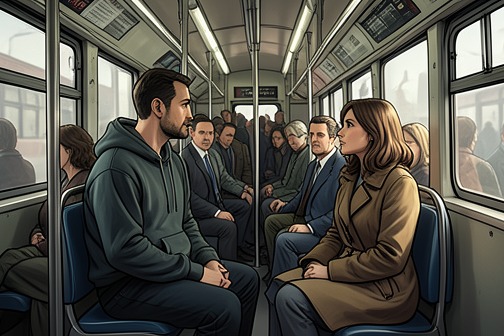
[Brick and Janae Meet on the Bus](entity:event-recall-event-brick-janae-387844910a3b) brings together two strangers carrying danger and loss into the same journey. Brick is leaving Buffalo because he is neither safe nor wanted there; Janae is someone he recognizes from reports and has not yet decided whether to help. Their encounter begins with observation rather than trust: a sketch, a guarded introduction, and the recognition that each has arrived on the bus with a history the other cannot immediately know.
## Flight and arrival
For Brick, the bus journey follows a decisive break with Buffalo. He believes the truth has freed him, but that freedom has not made him safe: there is a price on his head, and he knows he is not wanted in the city. He puts his hoodie over his head, walks to a waiting Liberty taxicab, and chooses [California](entity:location-recall-location-california-fd5bbc3f2eb4) as his destination. He cannot explain the choice beyond a sense that it may be where he needs to go. The decision is therefore both practical flight and an uncertain reach toward somewhere different.
The journey places Brick in the presence of a stranger before either has explained themselves. He sees a very tall, powerfully built man across from him, with milk-chocolate-colored skin and eyes he compares to silver dollars. Wearing red Beats headphones, the stranger listens to The Game and Lil Wayne’s “My Life.” Brick takes out his sketchpad and draws him. The image looks like its subject, but Brick adds two drops to the cheeks even though he has seen no tears. The drawing records what he reads as sadness, while also reflecting the sadness he recognizes within himself. It is an intimate first act of attention, though not yet an exchange of trust.
## Janae enters Brick’s attention
Brick’s account then turns to the woman seated beside him. He believes she was supposed to be dead before she boarded and knows her through articles and videos. Those reports have made her seem, to him, like a vulnerable woman entangled with a harmful partner. He has not settled on helping her: he intends to figure her out and determine whether she is someone he should help. His attention is thus divided between suspicion and responsibility, and the decision remains open at the point of their meeting.
The surrounding exchange suggests that someone has arranged for care or assistance. A speaker says, “The council man wife sent me to take care of you.” The evidence does not identify the speaker, so the remark does not by itself establish who made the arrangement or what Brick’s role is in it. It nevertheless introduces an expectation of protection into a scene in which Brick is himself fleeing danger and is still assessing the person beside him.
## Names, boundaries, and first contact
Janae responds to an assumed maternal address by correcting it: “Thank you and I am not your Ma. My name is Janae.” Her reply establishes a boundary and gives Brick the name by which she wishes to be known. He observes the roundness of her face, a single dimple on her right cheek, lips glossed with Vaseline, and crinkle curls left by braids. He then extends his hand and introduces himself. The encounter moves from watching at a distance toward direct acknowledgment, but the introduction does not erase the caution with which Brick began.
That contrast gives the scene its shape. Brick initially treats Janae as a figure assembled from public reports, one whose past he needs to investigate before choosing whether to intervene. Her correction makes her a person speaking for herself rather than merely the subject of those reports. His sketch of the stranger has already shown how he gives visible form to sadness; with Janae, the first step is instead a name and a handshake. In both moments, the bus brings him close to people whose circumstances he cannot fully know from appearances alone.
## Disclosure and significance
In the conversation associated with their meeting, Janae describes the rejection that shaped her understanding of her own survival. She says her birth mother attempted to end the pregnancy at twenty-six weeks; after the attempt failed, Janae was left unattended, and [Grace](entity:character-recall-character-grace-f21f0fdf609d), the nurse who first cared for her, saved her life. Janae also says that her mother was told she had survived and wanted the staff to let her die. Janae calls her mother her murderer because she feels she has not truly lived, only existed. The account explains why the reports Brick has seen cannot encompass her: the danger attached to her present situation sits alongside a much earlier history of abandonment.
The meeting does not resolve whether Brick will help Janae, nor does the evidence establish that they immediately trust one another. Its importance lies in the opening of that possibility. Brick leaves Buffalo believing truth has brought freedom but not security; he meets Janae while deciding whether to extend care to someone he initially knows only through troubling accounts. Her insistence on her name, followed by her account of survival, shifts the encounter from outside observation toward a more personal understanding. The bus becomes the setting for a tentative connection between two people whose journeys are marked, in different ways, by danger, loss, and the question of whether another person can be trusted.
Event 6
The Cleveland Station Attack and Brick's Rescue
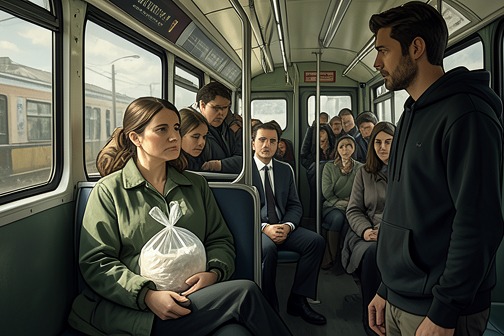
[The Cleveland Station Attack and Brick's Rescue](entity:event-recall-event-brick-2eabeb9dc4ad) is the turning point at which [Jensen Brick McCall](entity:character-recall-character-jensen-brick-mccall-7d329989a38d)'s paid assignment against [Janae Morrison](entity:character-recall-character-janae-morrison-a60d65b6df7c) gives way to an immediate act of protection. At the [Cleveland, Ohio](entity:location-recall-location-cleveland-ohio-fe41fd70afa2), depot, a missing bag of cocaine and Janae's unexplained absence bring the danger of the journey into focus; when an attacker assaults her, Jensen intervenes and rescues her.
## Causes and Background
Before the attack, Janae is already in danger for reasons Jensen knows but has not resolved. While stranded in [Buffalo, New York](entity:location-recall-location-buffalo-new-york-0ee2b5ebd46e), he had been approached by a wealthy, aggrieved woman who transferred $25,000 to his bank account and gave him Janae's picture. The woman wanted Janae destroyed and never to return to Buffalo. The commission makes the passenger beside Jensen on the bus more than a stranger: she is the intended target of the violence he was paid to carry out. Yet as he watches her, he questions whether he should help her, rather than treating the contract as a settled decision.
The immediate crisis develops when Janae leaves her seat for the bathroom and Jensen notices a clear bag containing a powdery substance. Recognizing it as cocaine, he takes it from the seat, aware that carrying it could expose him to arrest. As the bus reaches the Cleveland depot, he sees Border Patrol cars and officers approaching. While Janae remains in the bathroom, he hides the bag in his shoe as officers check passengers' identification. Once they have passed, he rushes off the bus and throws the drugs away. Janae still has not returned, and his alarm shifts from the risk of being caught with cocaine to concern for the stranger whose absence he cannot explain.
## The Attack and Intervention
Janae’s absence becomes a physical emergency away from the bus: an attacker pins her down in the mud, grips her throat, reaches toward her breasts, and tries to take her money. She coughs and struggles to breathe, scratches at his hands, then fights back by kicking and biting him. When he releases her, she runs, but he catches up and grabs her hoodie, tightening its neck around her throat. Unable to scream, she manages to call for help one syllable at a time.
Jensen Brick McCall arrives as the attacker’s weight bears down on Janae. He pulls the man off her, lifts him by the throat, punches him in the stomach, and slams him onto the concrete. He continues striking him, stomps on his chest, searches his pockets, and retrieves Janae’s envelope. The rescue reverses the immediate danger, but its force is unmistakable: Jensen acts to protect someone he had been paid to harm, while using severe violence against the person attacking her.
Afterward, Jensen helps Janae stand, brushes her clothes, and wipes mud from her hands and face with a towel from his bag. His care is followed by anger. He rebukes her for leaving cocaine on the bus, which could have exposed him to arrest, and for going with a stranger to obtain more. Janae answers that his saving her does not give him the right to speak to her however he likes, insisting that he does not know her. The exchange establishes the rescue as more than a simple rescue: immediate protection has begun to replace the contract, but trust between the two passengers has not yet been earned.
## The Earlier Failure Behind the Intervention
The force of Jensen Brick McCall’s intervention is sharpened by an earlier failure he carries as guilt. After [Chyna](entity:character-recall-character-chyna-ea72f7a5cb0f) and her son [Mortez Payne](entity:character-recall-character-mortez-payne-a306fe376055) were murdered by gang members who suspected her of informing on them, Jensen remembered standing there, unable to save them. Chyna had admitted that she, too, had talked to the authorities, but when Jensen tried to offer himself in her place, she covered his mouth and told him to survive and become somebody great. His memory of her death is therefore not simply grief for a friend: it is the knowledge that fear kept him from acting when someone he loved was in mortal danger.
That bond had begun in a group home, where Chyna and Jensen first defended themselves against her sons’ attempted sexual assault. She came to regard him as a brother, while he wanted a closer intimacy; Chyna maintained that friendship was safer than being lovers. After her death, Jensen described her as the person who had loved and accepted him when he had little else. His rescue of Janae Morrison thus occurs against a history in which affection, danger, and helplessness have become entangled. The earlier loss gives his decision to intervene particular weight without making it a simple act of redemption: it cannot undo what happened to Chyna and Mortez.
Jensen had also connected his silence around [Grace McCall](entity:character-recall-character-grace-mccall-73a0f36b2dc8)’s drug use to the deaths he witnessed, treating his failure to speak as a moral burden rather than an excuse. In the aftermath of Chyna’s murder, he resolved not to let another woman die without attempting to save her. The Cleveland attack places that resolve in a new, immediate test. Janae is not someone he already knows or can confidently trust; she is a fellow passenger whose danger interrupts the assignment he had accepted. His action makes protection a choice made in the present, while the memories behind it show why that choice matters to him.
Later, Jensen tells Janae that at fourteen he was sexually coerced by an older foster sibling who threatened to accuse him of rape and have him put out of the home. Janae recognizes what he describes as rape, while Jensen explains that the threat of losing his placement was central to his fear. That later disclosure does not establish what he was thinking during the attack, but it places the rescue within a relationship that gradually makes room for each of them to speak about vulnerability and harm. The depot episode begins that movement through action: Jensen protects Janae before trust has been established, and the subsequent exchange preserves the difference between being saved and being entitled to another person’s confidence.
## Aftermath and Significance
The rescue does not settle the relationship between Jensen Brick McCall and Janae Morrison; instead, it opens a connection that later bears disclosures neither could have offered at the depot. Janae eventually hears Jensen explain that his biological mother attempted to end his life before birth, that a failed abortion left him on a table to die, and that Grace McCall, the nurse who first cared for him, saved him despite his mother’s order to let him die. As he speaks, [Ginger Pearl](entity:character-recall-character-ginger-pearl-45f9b0032307) recognizes him as her grandson, while Janae holds his hand. The scene gives the rescue a wider emotional consequence: the man who acted when Janae was in danger becomes someone whose own history of abandonment can be witnessed.
That later intimacy does not erase the violence of the depot encounter or make trust automatic. It develops through moments of disclosure and choice, including Jensen’s eventual embrace of his mother after receiving an explanation for why she left him. He leaves her his number and offers to sit with her at dialysis if needed. Set against those later possibilities, the Cleveland attack marks a first, concrete break with the role assigned to him: the paid commission no longer determines what he does when another person faces immediate harm.
Event 7
Ginger Pearl Recognizes Jensen as Her Lost Grandson

[Ginger Pearl Recognizes Jensen as Her Lost Grandson](entity:event-recall-event-ginger-pearl-jensen-dabaa5e5f4b8) is a gradual revelation aboard a bus: Ginger identifies [Jensen Brick McCall](entity:character-recall-character-jensen-brick-mccall-7d329989a38d) as the baby her daughter had told her was aborted, yet does not tell him directly. A photograph tucked inside Ginger’s Bible first makes the family resemblance visible; later, her phone call and the pictures Jensen examines confirm what she suspects. The discovery gives shape to Jensen’s long-held hope for his birth mother, but the event ends not in reunion or explanation, only in his knowledge that Ginger has recognized him and is still withholding the truth.
## The Photograph in the Bible
As Ginger makes her way to a seat with assistance, her Bible falls and several photographs spill out. [Janae Morrison](entity:character-recall-character-janae-morrison-a60d65b6df7c) and Jensen bend to gather them. Jensen sees a picture of a little girl who resembles the woman he calls his murderer, and the resemblance makes it difficult for him to speak. He returns the picture, then moves to the far end of the bus. The object has abruptly changed the encounter: what had been an ordinary act of helping Ginger now places Jensen face to face with an image connected to the mother he has spent years trying to imagine.
Ginger identifies the child in the photograph as her daughter when Jensen asks about it. She also says that her daughter has two children, born later in life after she chose to wait until marriage. As she gathers the pictures and puts them neatly back into her Bible, she pauses over a photograph of a fat baby and traces it with her fingers. Jensen hears her thank God that she has found him. Her reaction is private and not yet an explanation to him; he asks who she has found, while the reader sees Ginger beginning to connect the baby in the picture to the man sharing her journey.
## The Story Ginger Has Been Told
The recognition becomes more explicit when Ginger receives a phone call. She tells the person on the other end that they will need to discuss the truth about the baby when she gets home. She says she thinks she has met that person’s son, that he looks like her, and that his grey eyes are the exception. Ginger recalls that a nurse had sent her a picture of the baby and says her daughter had lied by claiming to have had an abortion. She now believes Jensen is her grandson.
Janae overhears enough to ask Ginger whether Jensen is her grandson, adding that he does not know. Ginger widens her eyes and covers her mouth. She denies being sure, says that he looks like her daughter, and asks Janae not to tell him. Her caution matters: recognition is emotionally strong, but Ginger initially describes it as a conclusion she cannot yet verify. Janae presses her to tell Jensen anyway, even if she is wrong. The scene therefore separates the two women’s responses: Ginger fears disclosing an uncertain truth, while Janae argues that Jensen should not be kept outside it.
## Jensen Confirms What He Has Seen
Jensen’s own confirmation comes later, after he gets up to go to the bathroom. On his phone, he studies pictures he has saved of the woman he calls his murderer and her family. One image shows Ginger holding two grandchildren on her lap. He recognizes the same braids with beads at their ends, the aqua-blue necklace, and the ring he has seen in person. These repeated visual details link the pictures to the woman beside him and convince him that Ginger had recognized him while pretending not to know who he was.
When he returns, he hears Ginger tell Janae that he is her grandson and that she can see his mother in him. Janae again urges her to tell him. Jensen sits down without speaking. His rage rises, but he remains silent rather than confronting Ginger. The moment resolves the question of what Ginger believes, not what she will do with that knowledge: Jensen has heard her acknowledgment, while she has not yet addressed him openly.
## Memory, Evidence, and Withheld Truth
The encounter carries particular weight because Jensen has already imagined a different kind of meeting with his mother. He has searched her online presence and seen pictures of her family celebrating birthdays, Christmases, and Thanksgiving, as well as information about the beauty salon and spa she runs in [Leimert Park](entity:location-recall-location-leimert-park-c2e48acaddd9). Those images show a settled life from which he feels excluded. Against that public record, his private memories include letters he wrote to her, the hope that she might collect him from foster homes, and imagined [Christmas](entity:time-recall-time-0cffe7da2c4d) visits with gifts and new Jordan shoes. He has also remembered believing, at ten, that she had come to his school and argued with [Grace](entity:character-recall-character-grace-f21f0fdf609d) on his behalf; he understands that hope as an illusion, but it continues to return.
The recognition reaches Jensen through fragments rather than a direct confession: a baby photograph in a Bible, Ginger’s account of the nurse’s picture and the alleged abortion, and familiar accessories in a saved family image. That sequence turns objects and digital records into evidence, but does not make the truth easy to receive. Ginger’s concealment repeats the distance between Jensen and the family history he longs to know, even as her recognition opens the possibility of a connection. The event’s decisive change is therefore double: Ginger sees the grandson she had been told was dead, and Jensen learns that she has seen him, while neither recognition yet becomes an honest conversation between them.
Event 8
Jensen Reconciles with Ginger Pearl on the Bus

[Jensen Reconciles with Ginger Pearl on the Bus](entity:event-recall-event-jensen-ginger-pearl-e4f0dff70643) marks a shift from anger over concealed kinship to a fragile, openly acknowledged family bond. Jensen, who has learned that [Ginger Pearl](entity:character-recall-character-ginger-pearl-45f9b0032307) is his grandmother, first challenges her for withholding that truth and rejects attempts to soften his birth mother’s actions. On the bus, he later apologizes for his disrespect, asks for confirmation that he is accepted into Ginger Pearl’s life, and receives it in an embrace. The scene makes reconciliation an act of candor and present-tense care, not a claim that the past has been repaired.
## The Earlier Rupture
Jensen’s anger begins with the discovery that Ginger Pearl recognized him as her grandson but had not told him directly. He had overheard her say that he was her grandson and that he looked like his birth mother, whom he calls his murderer. When Ginger Pearl explains that she did not know how to tell him and his mother about the mistake, Jensen refuses to accept that description as sufficient. He distinguishes an ordinary mistake from the decision to leave an unborn child on a table to die after an earlier attempt failed, and insists that his mother’s actions cannot be excused by calling them accidental.
The accusation is not limited to Ginger Pearl’s silence. Jensen tells her that he is done with her lies, while she reaches toward him, apologizes, and says she never meant to lie. He pushes her hand away. Clutching her Bible, Ginger Pearl lowers her head; Jensen points out the contradiction between invoking scripture and withholding the truth. Her eventual admission that he is right and she is wrong does not settle the conflict, but it changes its terms: the scene leaves open a way forward because Ginger Pearl acknowledges fault rather than defending the concealment.
## The Conversation on the Bus
On a later morning aboard the bus, Jensen decides to speak with Ginger Pearl. [Reba Clara Bell Gilbert](entity:character-recall-character-reba-clara-bell-gil-61958878f7f6) is sitting in his seat when he returns, and Ginger Pearl is reading her Bible. Jensen sits beside her and tells her that the concealment hurt him. He does not want the two of them to leave the bus carrying animosity, and he apologizes for disrespecting her. After Ginger Pearl asks him to sit and talk, he agrees, making the conversation a deliberate reopening rather than an accidental easing of tension.
Ginger Pearl explains that she did not know how to address Jensen as her grandson. She also gives him part of the family history: she had sent his mother to [New York](entity:location-recall-location-new-york-2757ba8db2ef) for a while because they did not get along. Her daughter resented Ginger Pearl’s marriage to a white man, and the fact that her younger brother was white deepened that conflict. Ginger Pearl adds that Jensen’s mother was eighteen and afraid of her reaction. The explanation supplies circumstances for the family rupture without undoing the harm Jensen has named or requiring him to accept his mother’s past as an excuse.
Jensen draws that boundary explicitly. He says he resents his mother’s choice and does not want to hear sad stories about her past. His refusal matters alongside his apology: reconciliation with Ginger Pearl does not require him to abandon his anger toward his birth mother or to treat the two relationships as interchangeable. The bus conversation permits a more limited form of understanding, in which Ginger Pearl can explain her own position and Jensen can listen without surrendering his judgment.
## Recognition and Acceptance
The exchange turns from history to the relationship Jensen and Ginger Pearl might still have. Jensen tells her that she is already part of his life. He has saved the photographs on his phone, and seeing Ginger Pearl holding her grandchildren in her lap has made him feel the absence of the childhood he did not share with her. He names what the images represent to him: not simply proof of a family connection, but the missed experience of sitting on his grandmother’s lap or spending nights at her house. His request is for Ginger Pearl to admit that she accepts him into her life.
Ginger Pearl answers by wrapping her arms around him. She welcomes him into her life and says that she has missed the time they lost, too. She acknowledges that his mother took that time from her, but turns away from dwelling only on yesterday, saying she can do right by him today. Jensen holds her tightly, and she kisses his forehead. These gestures complete the scene’s change in emotional direction: after he had pushed away her outstretched hand, he now returns her embrace. The response is bodily as well as verbal, but it does not make the lost years disappear.
## Significance
The reconciliation is built through a sequence of accountability rather than a sudden absolution. Ginger Pearl first admits that she was wrong to have concealed the truth; later she gives Jensen an explanation of the family conflict and welcomes him without demanding that he forgive his mother. Jensen, in turn, names his hurt, apologizes for the way he treated Ginger Pearl, and asks directly for acceptance. Each step addresses a different part of the estrangement: the lie, the family history, the years of absence, and the possibility of belonging now.
The photographs sharpen the contrast at the center of the encounter. They show Ginger Pearl participating in her grandchildren’s lives, while Jensen confronts what he did not have: a grandmother’s lap, nights at her home, and time together. The embrace cannot supply those experiences retroactively. Its promise is narrower and more concrete: Ginger Pearl can welcome him in the present, and Jensen can hold on to that welcome without pretending that the past was harmless. The bus scene therefore establishes reconciliation as an opening between grandmother and grandson, grounded in truth, grief for lost time, and a commitment to do right by one another from here.
Event 9
Jensen Confronts His Birth Mother Gloria

[Jensen Brick McCall](entity:character-recall-character-jensen-brick-mccall-7d329989a38d)’s face-to-face confrontation with [Gloria Simpson Picou](entity:character-recall-character-gloria-simpson-pico-c2c5b2d8d48f) forces the story’s buried origin into the open: she is the mother who once expected him to die, and he is the son who survived without her. The meeting begins not with reconciliation but with tears, a demand to know why she let him go, and the possibility that the truth will damage the family she built afterward.
## The Meeting and Its Stakes
Jensen sits beside [Gloria](entity:character-recall-character-gloria-74d2fbb2cafc), seeing her at once as his mother and as a stranger. He is overcome by the impulse to hate and condemn her, but instead he cries. Her appearance sharpens the intimacy and distance between them: he recognizes features they share, while her makeup, hair, and unfamiliar presence make clear how little of her life he knows. Around them, ordinary neighborhood sounds continue—children watching television, cars passing, neighbors watering their lawns—while the heat and tension leave both of them struggling to contain their feelings.
Jensen asks Gloria to explain why she did not keep him. He reminds her that she saw him alive on a cold steel table and told others to let him die. The question is not merely about the circumstances of his birth: Jensen insists that his survival and the twenty-five years he lived without her make the answer matter now. Gloria initially resists the demand, asking why it matters when he is grown, then says that revealing the truth could destroy her family.
Jensen rejects that separation between her present family and the son she left behind. He argues that he, too, is her family, and suspects she wants to keep his existence secret from her husband and the rest of the world. When a young girl runs to Gloria and embraces her, the life Jensen was excluded from becomes physically present in the encounter. Gloria leaves briefly and returns with water, but the gesture does not settle the question between them: Jensen remains, insisting on an explanation.
## The Explanation and Its Cost
Gloria eventually explains that she was seventeen, frightened of becoming a mother, and afraid of her own mother’s judgment. She says she had not told anyone except Jensen’s father, who gave her money for an abortion; she did not expect the baby to survive, much less to be healthy or grow up. Her account then opens onto a deeper family secret: Gloria says she had been sent to live with her sister and brother in Brooklyn, where her uncle [Henry](entity:character-recall-character-henry-c166031952d6) sexually abused her for months and fathered Jensen. She had been raised to keep the abuse secret and not disrupt the family, while the adults around her treated her as the troubled, overlooked child. The revelation recasts Jensen’s rejection as part of a history of abuse and enforced silence, without undoing the fact that he was abandoned.
Jensen presses Gloria about whether she had also wished him dead when he was nine, and she answers yes. She says she hates herself for lacking the courage to love him simply as her son, and apologizes. The truth does not bring easy relief: Jensen throws the water bottle across the yard, where it bursts on the concrete, and tells her that he needed to hear her apology but cannot make her love him. He distinguishes himself from Henry, insisting that he is not the man who abused her. In that exchange, the meeting shifts from accusation toward an acknowledgment of the wound on both sides: Gloria names the abuse and her failure, while Jensen accepts the explanation without pretending it restores the years they lost.
## The Unresolved Bond and the Search for Purpose
After the confrontation, Jensen Brick McCall does not move directly into forgiveness. When Gloria Simpson Picou touches his hand, he jerks away and turns his head, avoiding her eyes because he fears that looking at her might let understanding and forgiveness in. He can see guilt in her, yet the sight of the woman who did not want him hurts: he still longs for his mother’s love even as anger tells him to refuse it. The moment leaves him caught between attachment and self-protection, not free of either. He decides he must move on and let go of the woman he calls both his mother and his murderer.
That contradiction gives their meeting its lasting force. Gloria’s account explains the violence and silence behind Jensen’s birth, but explanation does not restore the years they lost or erase his experience of being unwanted. His departure is therefore not a simple rejection of her, just as his tears were not proof that he had forgiven her. The encounter makes visible the difference between hearing the truth and being able to live with it: Jensen can recognize her guilt and still remain wounded by what she chose and failed to do.
Jensen’s retrospective framing turns the search for Gloria into part of a larger attempt to understand why he survived. He presents the life that preceded the meeting as marked by abandonment, foster care, homelessness, sexual violence, and repeated proximity to death. Finding the woman he calls his murderer becomes a quest to learn why she did not want to raise him; finding himself becomes the more consequential discovery. He frames the story as something that might help another young man who is trying to understand why he is still alive, transforming a private confrontation into testimony about survival and purpose.
## Silence, Dependency, and Recognition
The confession places two experiences of enforced silence beside one another without making them interchangeable. Gloria Simpson Picou says she was taught not to expose what happened within her family and was treated as the troubled child whose needs did not matter. Jensen Brick McCall, in a separate episode from his adolescence, recalls submitting to sex after a girl in a foster home threatened to accuse him of rape and have him put out. He feared being moved again; she reminded him that he was only a guest. In both histories, a young person’s dependence on adults and shelter narrows the space to refuse or speak, though the circumstances and harms are distinct.
That parallel sharpens the confrontation’s difficult recognition: Gloria’s account gives context to her fear and silence, but does not cancel Jensen’s abandonment or require him to absolve her. His insistence that he is not the uncle who abused her separates the son standing before her from the violence that shaped her memories. The scene allows the truth to explain how damage was concealed across a family while leaving its consequences present between mother and son.
Event 10
Robert Walters Is Shot and Killed by Elizabeth Walters

[Robert Walters](entity:character-recall-character-robert-walters-507d3e0b0047) Is Shot and Killed by [Elizabeth Mourning-Walters](entity:character-recall-character-elizabeth-mourning-8ef36bb9825f) becomes known through a sequence of reports and disclosures rather than a directly narrated shooting. The first account calls Robert’s head wound self-inflicted; Elizabeth later admits to shooting him. Her confession recasts the death as the violent culmination of a marriage marked by affairs, lies, and damage that extended beyond the couple.
## The News and Its Contradiction
The killing reaches [Jensen Brick McCall](entity:character-recall-character-jensen-brick-mccall-7d329989a38d) and [Janae Morrison](entity:character-recall-character-janae-morrison-a60d65b6df7c) while they are together in [Los Angeles](entity:location-recall-location-los-angeles-11eff639bdf5), caught in traffic among honking cars and the haze of smog. After they kiss, Janae checks her phone and learns that Robert has been found dead with a single wound to the head, initially described as self-inflicted. The intimate moment is abruptly overtaken by the news: Jensen sees Janae’s distress and asks what is wrong.
The account then shifts from the first report to the disclosure circulating on social media. Robert’s photograph appears beside memorial posts, while the story attached to his death names Elizabeth as the person who shot him. News coverage reports that she confessed, making the initial description of a self-inflicted wound difficult to reconcile with her admission. The narrative presents both versions without explaining the discrepancy; its emphasis falls on how the confession changes what those around Robert understand about his death.
## A Private Loss Becomes Public
Jensen receives the news in a room provided by Mrs. Pearl, where he sits staring at the wall. He feels physically distressed, with hot, gummy eyes, a scratchy throat, and a runny nose. Mrs. Pearl has been caring for him, but the news overwhelms the room’s temporary safety. Jensen’s response is sharpened by his sense of Robert as his first love: the killing is not merely a public scandal but a personal bereavement.
The story’s public dimension grows through a detailed interview with Elizabeth. The interviewer asks why she killed her husband, and Elizabeth describes rage, hatred, and anger mixed with love. Her answer refuses to reduce the act to a single emotion. Love remains in the account, but it coexists with the fury produced by betrayal; the killing emerges as a rupture inside a relationship that had not simply ceased to matter to her.
## The Affairs and Their Aftermath
The interview broadens the consequences of Robert’s conduct beyond his marriage. Asked about the women who had relationships with him, Elizabeth says she holds nothing against them and believes he did to them what he did to her, leaving them broken. She calls them all fools and says she forgives them. Her words distinguish the women from Robert: rather than treating them as the cause of the marriage’s destruction, she recognizes them as people who may also have been deceived and hurt.
The interviewer points to accounts from women who said they had not known Robert was married and asks whether he may have pursued them, using his status and power. The exchange raises the possibility that the relationships were not simply a series of equal, informed choices. Elizabeth says that he took her soul and freedom, then jingles the chains binding her hands. The gesture gives physical weight to her account of feeling trapped, while the interview makes the violence of the marriage’s aftermath visible through competing claims, questions, and testimony.
## Narrative Significance
The event changes the meaning of Robert’s death as information accumulates. A report that initially frames the wound as self-inflicted gives way to Elizabeth’s confession, and the focus moves from the bare fact of death to the years of affairs and the injuries they left behind. The book does not stage the shooting itself; it makes the reader encounter the killing through the shock of a phone notification, social-media memorials, and an interview. That mediated presentation keeps attention on the people forced to interpret the news and on the difference between a public account of a death and the intimate history that emerges around it.
Event 11
Janae and Brick Begin a Romantic Relationship in California

[Jensen Brick McCall](entity:character-recall-character-jensen-brick-mccall-7d329989a38d) and [Janae Morrison](entity:character-recall-character-janae-morrison-a60d65b6df7c) begin a romantic relationship in [California](entity:location-recall-location-california-fd5bbc3f2eb4) through acts of shelter, reassurance, and growing physical affection. The relationship is significant not because it erases either person’s past, but because its early promise of belonging develops alongside hesitation and unresolved pain: Jensen offers Janae a home, then recognizes that he is not ready to make her part of the life he is trying to rebuild.
## A Promise of Shelter
The relationship’s clearest beginning is a practical offer with a lasting implication. Although the two have only just met, Jensen tells Janae that as long as he has somewhere to live, she will never be without a home; he says she could stay with him for a lifetime, regardless of whether he is married. The promise gives their connection a form before either has established what it will become. Shelter is not presented as a passing favor but as a commitment to continued presence.
Janae responds with affection that surprises Jensen. With the Hollywood sign visible on the hills, she kisses his cheek and embraces him; he returns both gestures and says he is looking out for her. The exchange makes care reciprocal: Jensen has offered a place to live, while Janae answers with a sign that she is personally invested in him. Their closeness grows from a promise of security into a relationship neither can treat as merely practical.
## Affection and Hesitation in [Los Angeles](entity:location-recall-location-los-angeles-11eff639bdf5)
The pair’s first kiss takes place amid the traffic of Los Angeles. Cars are backed up, horns sound, and the city’s smog and bright sun form the immediate setting as Janae rests her head on Jensen’s shoulder and takes his hand. He lifts her chin, and they kiss. The scene gives their connection a clear change in status: what had been expressed through a home offer, an embrace, and mutual concern becomes openly romantic.
But the kiss does not resolve Jensen’s conflict. He wants Janae to remain in his life, yet thinks he must first put his past in order and begin his own life; he also recognizes that she was not part of the plan he had made for himself. As she sobs, affection and withdrawal occupy the same moment. The relationship begins with genuine desire, but Jensen’s self-imposed need to address his history keeps him from accepting the promise as simply as he offered it. His hesitation is consequential because the offer of a lifetime home has already invited Janae to imagine continuity.
## Intimacy Within a Wider Circle
In a later scene, Janae moves from her chair to sit beside Jensen, touches his face, and kisses him. He holds her as they kiss, but their privacy is interrupted when [Ginger Pearl](entity:character-recall-character-ginger-pearl-45f9b0032307) appears at the door. They separate, and Jensen leans his head on the desk. The interruption places their emerging relationship within a household and family circle rather than isolating it as a private romance. Later, Janae wraps her arms around Jensen’s waist, rests against his chest, kisses him again, and sighs. These gestures show continued closeness after the earlier uncertainty, without establishing that all of their difficulties have been settled.
Another quiet moment joins comfort to distress. Janae watches Jensen sleep and feels secure beside him; he moves closer and puts an arm around her. Yet her arm still bears the sting of earlier cuts, and her thoughts return to her sister’s news that [Robert Walters](entity:character-recall-character-robert-walters-507d3e0b0047) fathered the child she is carrying. The scene sets bodily and emotional vulnerability beside the safety she experiences with Jensen. Their intimacy can offer reassurance, but it does not remove the family revelations and painful circumstances that press into it.
## Histories the Relationship Carries
Jensen’s offer of lasting shelter has particular weight against the history he recounts: he has slept on library steps, been raped, moved through inhospitable living conditions, and been treated as an unwanted guest, reduced by others to the label of a foster child. His relationship with Janae therefore begins against a life shaped by insecure homes and rejection. His grief also remains active. He feels guilty over [Chyna](entity:character-recall-character-chyna-ea72f7a5cb0f)’s death and remembers loving her while she regarded him as a big brother; he has also lost friends who once welcomed him when he was wet, hungry, and without a place to stay. Those losses help explain why attachment matters so much, while also making a new bond carry the weight of what cannot be restored.
Janae, too, names a history that complicates closeness. She tells Jensen that she is an addict, uses drugs to forget that her mother does not love her and to escape her mistakes, and does not know how to stop. She has also been publicly discredited in the aftermath of her relationship with Robert Walters, despite retaining messages and other records; after repeated rejection and public shaming, she gave evidence to a news producer. In Los Angeles, she speaks to Jensen about the way skin color shapes how dark-skinned women are regarded and treated in relationships. These histories do not prove that the romance heals her or Jensen. Instead, they show the conditions under which their promises of care and belonging must operate: both bring losses and mistrust into a relationship that offers closeness without yet securing an uncomplicated future.
Event 12
Jensen Refuses to Donate a Kidney to His Birth Mother

Jensen’s refusal to help his birth mother obtain a kidney transplant is a confrontation over more than medical need: it brings his lifelong experience of rejection into conflict with [Ginger Pearl](entity:character-recall-character-ginger-pearl-45f9b0032307)’s appeal for compassion and family connection. He rejects the request and doubts Ginger Pearl’s motives, insisting on his right not to repay an absent mother with his body or labor. The refusal is not the story’s final word, however; a later family scene reveals that he eventually gives [Gloria Simpson Picou](entity:character-recall-character-gloria-simpson-pico-c2c5b2d8d48f) a kidney.
## The Request and Its Stakes
Ginger Pearl raises the subject while asking Jensen and [Janae Morrison](entity:character-recall-character-janae-morrison-a60d65b6df7c) to help with a fundraiser for someone important to her who is seriously ill. Jensen initially agrees to help before Ginger Pearl hesitates and identifies the patient as his mother. The pause matters: the fundraiser is not an abstract charitable cause but an appeal that brings the most painful relationship in Jensen’s life directly into the room.
Ginger Pearl explains that Gloria Simpson Picou needs a kidney transplant and that the bills are very high. She presents helping as the right thing to do, while Jensen hears an expectation that he should act for a woman who has not acted as his mother. He refuses before the conversation can turn into an uncomplicated plea for generosity. His objection is grounded in their history, not in a denial that the illness is serious.
## Why Jensen Refuses
Jensen answers Ginger Pearl’s appeal by pointing to the central injury between him and Gloria Simpson Picou: she would not acknowledge him as her son. In his view, asking him to help her now cannot be separated from the years in which she denied him recognition. His anger is therefore also a defense against being made responsible for repairing a bond that his birth mother refused to establish.
That history begins with his survival after a failed abortion at twenty-six weeks. Jensen recounts that he was left in a dark room on a table to die, and that [Grace McCall](entity:character-recall-character-grace-mccall-73a0f36b2dc8), the nurse caring for him, saved him. When she contacted his birth mother, the response was that he should be left to die. Jensen consequently calls her his murderer and describes his life as mere existence rather than a life he had been allowed to claim. Against that background, Ginger Pearl’s request asks him to consider providing care to the person he associates with his attempted death.
Jensen’s refusal is also shaped by his wider history of loss and instability. He describes having been treated as an unwelcome guest and dismissed as a foster child, having slept on library steps, and having endured abuse. He frames the search for the person he calls his murderer as part of a search for his own purpose. The transplant request lands inside that unfinished struggle: it asks him to turn a traumatic origin into an obligation to the person at its center.
## Suspicion and a Boundary
Ginger Pearl tries to persuade Jensen that doing something good for Gloria Simpson Picou might help the two of them see one another differently. Jensen pushes back against that possibility and anticipates the next step: being tested to find out whether he is a match. Ginger Pearl says the decision is his. The exchange makes the stakes plain without resolving them; the prospect of donation is raised, but Jensen does not consent to it in this conversation.
Later, Ginger Pearl acknowledges that finding Jensen so he could potentially give his mother a kidney was part of her reason for seeking him out. She adds that she also wanted to know him and become part of his life. Jensen does not accept that explanation as proof of affection. He says he will pay rent rather than remain indebted, and when she reaches to hug him, he pushes the embrace away. His mistrust turns a family overture into a question of whether care is genuine or conditional on what his body might provide.
Instead of accepting Ginger Pearl’s money or a place as a dependent, Jensen offers to work for what he owes. He points to repairs that need doing and says he can start with the broken banister and painting. This offer does not soften his refusal to help Gloria Simpson Picou, but it does show the terms on which he is willing to remain near Ginger Pearl: practical contribution rather than an unearned claim of intimacy. The distinction lets him keep a connection open while resisting the pressure to treat kinship as an automatic debt.
## The Refusal in the Larger Story
Janae Morrison witnesses the exchange and listens as Jensen and Ginger Pearl argue. Her presence places the confrontation within a story in which Jensen has begun to form new attachments, even while his past continues to govern what he can trust. The immediate outcome is a firm no, accompanied by suspicion and a rejection of Ginger Pearl’s attempted embrace. Nothing in the encounter establishes that he has agreed to testing or promised a later donation.
The later outcome changes the meaning of that refusal without erasing it. At a [Christmas](entity:time-recall-time-0cffe7da2c4d) family gathering, Jensen describes Gloria Simpson Picou as his mother and says he gave her his kidney so she could watch his brother and sister grow up. He sits at the head of a family table, while Ginger Pearl holds his newborn daughter, [Grace](entity:character-recall-character-grace-f21f0fdf609d) Pearl McCall. The earlier boundary therefore marks a point in a difficult relationship rather than its permanent conclusion. The story records both Jensen’s right to refuse when he feels used and his eventual decision to give, placing reconciliation not in an immediate response to pressure but in a later family life that his earlier self could not yet imagine.
Event 13
Jensen's Abandonment at Birth
[Jensen's Abandonment at Birth](entity:event-recall-event-jensen-s-abandonment-at-4e8f2deb1c36) is the founding rupture of [Jensen Brick McCall](entity:character-recall-character-jensen-brick-mccall-7d329989a38d)'s life: [Gloria Simpson Picou](entity:character-recall-character-gloria-simpson-pico-c2c5b2d8d48f) concealed her pregnancy and left him for dead, while [Grace McCall](entity:character-recall-character-grace-mccall-73a0f36b2dc8) chose to save and raise him. The event makes survival both a gift and a burden. Jensen lives, but grows up without knowing his birth family, carrying the knowledge that his first mother rejected him and searching for an explanation that will make sense of that beginning.
## The Birth and Rescue
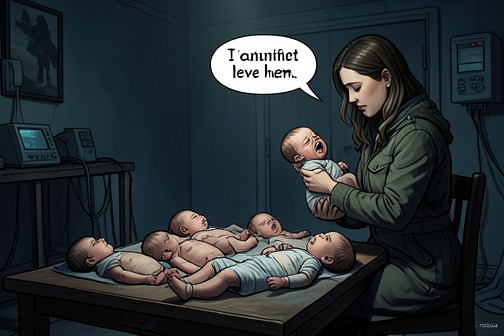
Grace McCall later tells Jensen that he had been left in a cold, dark room for hours after birth. She remembers him crying and moving, and says that when he grasped her fingertip and opened his eyes, she could not leave him. He was on a table beside eleven dead babies. [Grace](entity:character-recall-character-grace-f21f0fdf609d) calls him her miracle baby: the one she chose to save when the others around him had been allowed to die.
The story places his survival within a larger practice of letting babies die after failed late abortions. Grace had assisted in procedures in which mothers asked that a living baby be allowed to die. The babies haunted her afterward: she dreamed of them and heard their cries while awake. She says she saved Jensen, but the account does not turn that rescue into a simple deliverance. He survives through one person's intervention in a setting where other newborns did not.
Grace becomes the mother who raises him, though she will not let him call her Mom, insisting that doing so would disrespect his birth mother. Their bond is therefore shaped from the outset by both devotion and the concealed identity Jensen cannot yet understand. A birth certificate and death certificate later stand among the documents marking how closely his life has been tied to death from its beginning.
## Concealment and Belated Disclosure
[Gloria](entity:character-recall-character-gloria-74d2fbb2cafc) hid her pregnancy, and Jensen's maternal relatives did not learn that he was alive until much later. In a conversation with Jensen, his brother explains that the family discovered the truth only two years earlier, after [Ginger Pearl](entity:character-recall-character-ginger-pearl-45f9b0032307) found photographs and made it her business to search for him. The secrecy extended beyond the delivery: Jensen was raised without knowing his blood family, and his understanding of his origins had to be assembled through other people's accounts.
A separate recollection concerns a visit to Jensen's school when he was ten. An adult recalls that Gloria had asked for financial help because she was running out of money to care for him; the visitor brought five thousand dollars and had pleaded to see him. Gloria introduced the visitor as someone she had worked with. Jensen later describes having recognized that the visitor was his mother. The episode shows how his identity was obscured even when a possible encounter with family took place: the adults controlled what he was told, while he tried to read the truth from their actions.
## Gloria's Explanation
When Jensen finally confronts Gloria, he presses her to explain whether his dark skin affected her decision to let him die. She initially says that she was not ready to be a mother. Asked directly whether she had looked at his brown skin and told them to let him die, she answers yes. She explains that she feared raising a child while unsure of herself, says she hated her own complexion, and acknowledges that his dark skin reminded her that they would not be accepted.
The confession gives Jensen an answer, but not a clean resolution. Gloria's account connects her rejection to her own insecurity and fear of racial exclusion, without undoing the choice she made or the years of separation that followed. Jensen calls her his murderer, a name that turns the unanswered question of his birth into a personal quest. The truth clarifies the source of the wound while sharpening its racial and familial dimensions.
## The Life Shaped by Abandonment
Jensen describes a childhood spent being moved through foster homes and known as the foster kid. He recalls sleeping on library steps, being raped, and living in conditions he calls uninhabitable. He later says that he never knew his blood family. The pattern of being treated as a temporary guest follows him into adulthood; even as he tries to build a life, he carries the expectation that shelter and belonging can be withdrawn.
Grace provides the most enduring counterexample. She teaches him to read and tells him that education can save his life. When her addiction to Vicodin and Percocet worsens, Jensen begins caring for her at nine, bringing her tea and toast. Her rescue of him and his later care for her form a relationship grounded in reciprocal dependence, though her eventual death adds another loss to an already crowded history of abandonment.
Jensen's later relationships echo the same fear of losing people he cannot save. [Chyna](entity:character-recall-character-chyna-ea72f7a5cb0f), who grew up with him in a foster home and regarded him as a brother, becomes one of the few people he feels loved by; after her murder and the killing of her son, he blames himself for failing to protect them. He also says that drug use can help him forget that his mother does not love him. These later events do not make his birth the sole cause of every hardship, but they show how the original rejection recurs in his sense of guilt, grief, and responsibility for others.
## Narrative Significance
The abandonment is more than a piece of family history revealed after the fact. It is the event around which Jensen organizes his search for purpose: he says that finding his murderer ultimately led him to find himself. His retrospective account begins from survival and asks the reader to look backward to understand what survival cost. In that structure, the rescued infant and the adult who names his birth mother are the same person, but not yet reconciled versions of a life.
The story also sets two forms of motherhood against each other without making them interchangeable. Gloria gives birth to Jensen and abandons him; Grace finds him, raises him, and teaches him how to live. The late confession exposes the motives Gloria can name, while Grace's remembered fingertip, rescue, and years of care give Jensen a lived alternative to rejection. His survival begins with an act of care, but the meaning of that act—and of his mother's refusal—remains something he must continue to interpret.
Event 14
Grace's Death
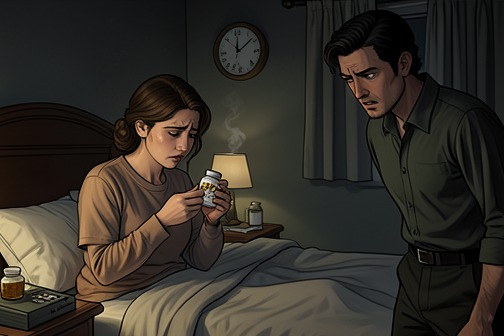
[Grace McCall](entity:character-recall-character-grace-mccall-73a0f36b2dc8)’s death is a defining loss in [Jensen Brick McCall](entity:character-recall-character-jensen-brick-mccall-7d329989a38d)’s history and the source of a hard-earned boundary he later sets with [Janae Morrison](entity:character-recall-character-janae-morrison-a60d65b6df7c): he will support someone’s recovery, but cannot undertake it for them. His account links [Grace](entity:character-recall-character-grace-f21f0fdf609d)’s concealed drug use and death to the limits of promises made without sustained change, while leaving the precise medical cause of her death unstated.
## The Woman Who Raised Him
Jensen describes Grace McCall as the woman who raised him. She had also been the nurse who first cared for him after his birth; when his biological mother, [Gloria Simpson Picou](entity:character-recall-character-gloria-simpson-pico-c2c5b2d8d48f), said the surviving infant should be left to die, Grace helped save his life. The person who became his mother through care therefore stands at both ends of his earliest history: she protected him as a newborn, then became the central loss of his childhood.
## Relapse and Death
In recounting Grace’s decline, Jensen says she promised to stop taking prescription drugs for his sake. She went to meetings, but for a year concealed that she was still taking Valiums and smoking water. Her condition worsened; she lost her job after stealing codeine, continued taking pills, and one day Jensen came home and found her dead. The account establishes the sequence of addiction, deception, declining circumstances, and death, but does not specify a medical cause or describe the circumstances of her final moments.
## The Story Jensen Tells Janae
Jensen shares this history while responding to Janae’s fear of being judged and her struggle with addiction. Grace’s promise to change, followed by a year of secrecy, gives his warning its personal force: he does not want Janae to make a promise for his sake that she will not keep for herself. He frames support as possible, but insists that another person cannot substitute for the addict’s own decision to seek change.
The disclosure is not an abstract lesson in his telling. It is tied to the experience of returning home to find the woman who raised him dead, and to a relationship in which care and harm coexist. Jensen can remember Grace as the person who saved him and as someone whose addiction ended in a loss he could not prevent.
## Aftermath and Narrative Significance
Jensen’s account of Grace’s death sits within a broader history of abandonment and hardship. He recalls sleeping on library steps, being raped, and being treated as an unwelcome guest and merely a foster kid. He later describes himself as having lived when he was expected to die, and presents the effort to understand why he survived as part of his search for purpose. The text does not attribute every later hardship to Grace’s death, but her loss forms one part of the history through which he understands survival and pain.
The story also complicates Jensen’s later family history. He eventually learns that [Gloria](entity:character-recall-character-gloria-74d2fbb2cafc) concealed her pregnancy and that his family did not know he was alive until years later; Grace, by contrast, is identified as the nurse who intervened and the woman who raised him. The distinction makes his account of motherhood inseparable from both abandonment and rescue. In telling Janae what Grace’s concealed addiction cost, Jensen turns a private bereavement into a boundary about honesty and recovery, without pretending that love alone could have saved Grace.
Event 15
Robert Walters' Betrayal Revealed

[Robert Walters](entity:character-recall-character-robert-walters-507d3e0b0047)’ Betrayal Revealed exposes the double relationship Robert Walters concealed from [Janae Morrison](entity:character-recall-character-janae-morrison-a60d65b6df7c): he was involved with Janae and her sister, who was pregnant with his child. The revelation turns a private romance into a family betrayal and forces Janae to confront how little she understood of Robert’s conduct and intentions.
## The Revelation
The news arrives by phone. After asking why the caller is contacting her, Janae hears that the caller is pregnant; when she asks who the father is, the answer identifies Robert Walters. Janae drops the phone and cannot breathe. The abrupt exchange makes the pregnancy more than a piece of family news: it is the moment Janae learns that Robert’s relationship with her has overlapped with his involvement with her sister, and that the consequences reach into her own family.
## The Wider Family Fallout
The revelation is not confined to Janae Morrison’s call. It is also stated in the language of shared betrayal: Robert Walters is identified as the father of the speaker’s baby, and the speaker says he had been sleeping with both sisters. The accusation redirects the shame Janae had turned on herself. Her sister describes believing that Robert loved her and feeling foolish for that belief; Janae’s discovery therefore exposes not a simple rivalry between the women but Robert’s overlapping relationships and the damage his deception caused within the family.
The accusation resurfaces amid a family gathering, where the speaker rejects the image of Janae as a “perfect sister.” The feast and the effort to connect with family sit against this confrontation: kinship offers a setting for reunion, but it also gives the betrayal an audience and makes its consequences harder to contain. Janae’s sister apologizes while insisting that the truth be heard, turning disclosure into both an act of injury and a demand that the family face what Robert had concealed.
## The Betrayal in a Larger Pattern
The disclosure returns in a later conversation, now joined to visible signs of distress: Janae twists a tissue, and her bandaged wrist hurts enough that she winces. She says her sister was involved with Robert Walters too, is pregnant with his child, and that she feels foolish for believing he loved her. The revelation has moved beyond the shock of the phone call; Janae is trying to understand the affair as a personal betrayal without accepting blame for having trusted him.
Her companion places Robert’s conduct in a broader pattern, describing his infidelity toward his wife and multiple women alongside his drugging Janae and getting her hooked on drugs. That account reframes the affair as part of a damaging relationship rather than an isolated breach of fidelity. The companion tells Janae she will not be left alone, setting that promise of support against Robert’s exploitation and the sisters’ shared hurt.
## Narrative Function
The revelation unfolds in stages: the phone call gives Janae Morrison the bare facts of the pregnancy and paternity, while a later conversation lets her name the betrayal alongside her belief that Robert Walters loved her. That shift from shock to explanation changes the event’s force. The pregnancy first registers as an abrupt disclosure; in retrospect, it belongs to a pattern of deception and harm that Janae is only beginning to articulate.
Event 16
Janae's Self-Harm Crisis and Hospitalization

[Janae's Self-Harm Crisis and Hospitalization](entity:event-recall-event-janae-s-self-harm-crisi-6ffe3e2af882) is a turning point in which private distress becomes a medical emergency. Jensen finds Janae unconscious on the floor, with blood across the carpet, and calls 911 before gathering her into his arms. Her crisis exposes both the danger of her self-harm and the fragile trust between the two characters: he is frightened of losing another person he loves, while she has already asked that he not be made to leave her.
## The Crisis and Its Immediate Context
The discovery is especially painful because Jensen remembers Janae promising not to cut herself again. Her arms and legs bear numerous cuts, and the sight draws him into the role of protector even as he is overwhelmed by fear. He pleads for her not to be taken from him, a response shaped by his own history of abandonment and repeated loss. Earlier, he had described himself as having survived circumstances in which he was expected to die; the deaths of people close to him, including [Chyna](entity:character-recall-character-chyna-ea72f7a5cb0f) and friends from Brick town, had made each new threat of loss feel cumulative rather than isolated.
When paramedics, police officers, and firefighters arrive, they ask whether Janae is suicidal or using drugs and why she has so many cuts. Jensen says that he is a close friend and explains that she recently lost a boyfriend to murder, exaggerating the truth to protect her. He lets the responders treat Janae and take her away by ambulance, but also removes the safe from the room because he trusts no one. His actions combine practical intervention with guardedness: he seeks help for Janae while remaining alert to what others might do with what they find.
## Hospital Assessment and the Limits of Care
At the hospital, Janae asks that Jensen be allowed to stay: she identifies him as her best friend and says she has no family. Her plea makes the emergency more than a clinical episode; in the immediate aftermath of self-harm, his presence is the connection she is trying to keep hold of.
A staff member explains that a suicide attempt would ordinarily lead to three days of evaluation in the hospital’s mental-health department. But Janae has no insurance or reliable way to cover the costs, and the hospital does not participate in Medicaid. The usual assessment therefore gives way to a constrained choice: sign an agreement to enter a free, intensive dialectical behavior therapy program, or be sent to the county facility. The proposed program combines group and individual counseling and can help participants obtain health insurance; the staff member describes it as intended for people who cut themselves.
Janae agrees and signs the paper. Before leaving, the staff member gives them a brochure and the program’s address, along with information about mental health. The crisis thus ends not with an extended hospital stay but with a required step toward outpatient care, made possible by a program offered in the shadow of the hospital’s financial and coverage limits.
## Recovery, Trust, and Continuing Vulnerability
The emergency does not make Janae’s distress disappear; later scenes show the wounds and pressures that remain after she has agreed to seek help. As she rests beside Jensen, the cuts on her arm sting, while her sister’s voice returns with the revelation that Robert is the father of the child Janae is carrying. The scene places physical pain beside a new family betrayal, suggesting how several unresolved injuries press on her at once without reducing the crisis to any single cause.
Janae’s later encounter with [Inya](entity:character-recall-character-inya-814dd63df1fc) turns on the fear that seeking help will expose her to judgment. Inya offers assistance directly, and Janae says she does not want to be criticized. Inya answers by rejecting the label of bad energy that has weighed on Janae and asks her to repeat that she is not bad energy. The exchange offers a different kind of response from the emergency assessment: not a diagnosis, but a deliberate challenge to the condemning identity Janae has absorbed.
Her recovery remains precarious. Janae later admits that she is using cocaine to forget her mother’s rejection and her own mistakes, and that she does not know how to stop. Jensen sees her drug use alongside the healed cut marks on her arm; his decision to leave follows her concealment and the resulting breach of trust. The episode’s aftermath is therefore not a simple progression from crisis to safety. Janae accepts a route toward counseling, but the later return of addiction and relationship conflict shows how much work remains to keep that first agreement from becoming the whole story of recovery.
## Witnessing and the Longer Arc of Recovery
Inya’s help carries the weight of her own history. She tells Janae that she once used Sherm and crack, lost her nine-year-old daughter to murder during a period of addiction, and made several attempts to take her own life before getting clean and dedicating herself to helping others. That disclosure does not erase the difference between counselor and client, but it makes Inya a witness whose authority comes partly from having endured devastation herself. Her insistence that Janae is not bad energy counters the shame that has attached itself to Janae’s distress without pretending that reassurance alone can resolve it.
The novel’s later ending gives Janae a future beyond the crisis: one year later, she and Jensen are married and become parents to [Grace](entity:character-recall-character-grace-f21f0fdf609d) Pearl McCall on [Christmas Day](entity:time-recall-time-christmas-day-08a71908c479). This outcome does not establish that the emergency or the counseling agreement cured her self-harm, and the intervening return of cocaine use makes any simple recovery narrative untenable. Instead, the crisis remains one point in a longer, uneven struggle, while the ending places Janae within a family she has helped build and a life that continues after the moment when Jensen feared losing her.
Event 17
Jensen and Janae's First Kiss

[Janae Morrison](entity:character-recall-character-janae-morrison-a60d65b6df7c) and [Jensen Brick McCall](entity:character-recall-character-jensen-brick-mccall-7d329989a38d)’s first kiss turns a hesitant attraction into a mutual act of trust: they name their longing for honest love, Jensen asks permission, and Janae closes the distance. The kiss offers neither a cure for their histories nor a guarantee of lasting security; it begins a relationship whose intimacy will remain vulnerable to old wounds and broken trust.
## The Longing Behind the Kiss
Before they kiss, both characters describe wanting the same thing: love without games, lies, or the feeling that an apparent bond will vanish by morning. Janae connects that longing to being judged and to cutting herself in the hope that someone would care enough to say they loved her. Her disclosure makes the kiss more than a sudden romantic gesture: it answers a need she has struggled to express, while also exposing how much pain remains beneath her hope for closeness.
Jensen responds that her desire makes sense to him, though he cannot explain why he feels so connected to her. He says he wants to protect her with his life, while rejecting the promise of a fairy-tale romance. His uncertainty does not stop him from asking whether he can kiss her. The request places a clear choice before Janae rather than treating her vulnerability as permission.
The moment also sits against the histories each brings to intimacy. Jensen has described losing his virginity at fourteen after a girl in a foster home threatened to accuse him of rape and get him put out if he refused her. He later recognizes the experience as rape, and identifies the threat of losing a home—not desire—as what made him comply. Janae's account of wanting love while hurting herself likewise shows that the kiss takes place amid unresolved pain, not outside it.
## The Kiss and Its Interruption
Before the kiss, Jensen turns Janae toward him until their noses touch. Both hesitate over what joining together could mean: whether it might help them or destroy them. After he asks, Janae moves closer and places her lips on his. She describes feeling electric and, for several minutes, absorbed in his world. The narration registers the encounter through bodily sensation and proximity, making the shift from uncertainty to contact immediate rather than abstract.
Their physical closeness deepens, but the scene does not end in private or become a declaration of certainty. A knock interrupts them, and [Ginger Pearl](entity:character-recall-character-ginger-pearl-45f9b0032307) calls them down to dinner. She says that Rita Pearl, a mother, and the rest of the family are there to meet the addressee. The sudden summons redirects the couple from an intimate exchange toward a family gathering, placing their new bond beside another possible form of connection.
## The Histories They Carry Into Closeness
For Jensen, attachment has repeatedly been shadowed by loss and guilt. He remembers [Chyna](entity:character-recall-character-chyna-ea72f7a5cb0f) as the person who loved him as he was and as the friend he loved but could not have as a partner. After her murder, he held her and her son, whom he had given a Transformer for [Christmas](entity:time-recall-time-0cffe7da2c4d), and blamed himself for not saving them. He also grieves the friends who first treated him as a human being when he was homeless and had been turned away from a foster home. These losses help explain why the desire to guard Janae carries such weight: his affection takes shape alongside a fear of failing people he loves.
Janae's own emotional life is not made secure by the kiss. Soon afterward, while Jensen sleeps with an arm around her, the cuts on her arm sting and the news that [Robert Walters](entity:character-recall-character-robert-walters-507d3e0b0047) fathered her sister's child presses on her thoughts. Later, she admits that she uses cocaine to escape the pain of believing her mother does not love her and of remembering her mistakes. The relationship therefore begins amid continuing crises, not after them; tenderness and distress remain present at the same time.
## What the First Kiss Begins—and Does Not Resolve
The kiss changes the connection between two people who recognize each other as misfits seeking love, but it does not erase the conditions that make trust difficult. When Jensen later discovers Janae's cocaine relapse and her deception about it, he tells her that the lying violates the trust he placed in her and leaves. His departure makes the first kiss more consequential, not less: it marks the beginning of a genuine attachment whose promise is tested by the very patterns of pain and concealment they had hoped to escape.
The scene's turning point is therefore both intimate and provisional. Janae accepts Jensen's invitation through action, and the two share a closeness neither can confidently predict. The interruption by Ginger Pearl's call opens the moment toward family, while the later rupture reveals its limits. Their first kiss establishes mutual desire and the possibility of care; it does not promise that desire alone can make either of them safe.
Event 18
Jensen's Arrival in California
[Jensen Brick McCall](entity:character-recall-character-jensen-brick-mccall-7d329989a38d)’s arrival in [California](entity:location-recall-location-california-fd5bbc3f2eb4) is less a straightforward homecoming than an entry into a family formed around a secret: [Gloria Simpson Picou](entity:character-recall-character-gloria-simpson-pico-c2c5b2d8d48f) hid her pregnancy, and relatives learned Jensen was alive only years later. He arrives intending to live with family, yet at the gathering meant to welcome him, kinship is announced around him before it is fully reconciled with him. The event brings practical relocation, public recognition, and unresolved hurt into the same frame.
## Relocation and First Contact
Jensen identifies himself as having come from [Syracuse, New York](entity:location-recall-location-syracuse-new-york-0a6ff9b7671f), and says he relocated the previous day to live with family. In a brief exchange involving his credit, he adds that young Black men can have good credit. The detail places his arrival in an ordinary transaction as well as a major change of residence: he is establishing himself in a new place, while answering an assumption about him. The evidence does not specify the transaction’s location, so the exchange offers a small measure of the practical adjustment without turning it into a larger arrival scene.
The family’s welcome takes a more vivid form at a feast [Ginger Pearl](entity:character-recall-character-ginger-pearl-45f9b0032307) has prepared. Meat and vegetables, gallons of sweet tea and lemonade, music, dancing, and the smoke from the barbecue pit make the gathering abundant and communal. People greet Jensen with hugs and kisses. The scale and warmth of the welcome establish that he has entered a large family circle, but the scene’s emotional terms are not shared by everyone present.
## Recognition Amid Estrangement
Ginger Pearl makes Jensen’s place in the family explicit by introducing him as her grandson, while noting that people call him Brick. She pulls him into an embrace. Her welcome is physical and direct, and the sensory details attached to it—her smell of sour pickles and Bengay—make this first contact concrete rather than ceremonial. For Jensen, the introduction supplies a relationship and a name for the bond; it does not make the gathering uncomplicated.
Another relative responds to Jensen’s appearance with praise, says she would have pursued him if she were his age, criticizes the mother of his child for not wanting the baby, and then identifies herself as his aunt. The sequence moves quickly from flirtatious appraisal to family grievance and formal recognition. Jensen answers politely, cuts his eye at the speaker and at Ginger Pearl, then moves through the crowd as his aunt follows. He texts [Janae Morrison](entity:character-recall-character-janae-morrison-a60d65b6df7c) and waits for a response. His actions register his distance from the gathering without establishing why Janae is absent or whether she will answer.
The sharpest contrast is Gloria Simpson Picou’s presence. She sits in a corner holding her children and never looks Jensen’s way. Around her, the feast continues in embraces, music, and dancing; between mother and son, recognition remains visibly withheld. Jensen looks for Janae and does not see her, so the two absences are not interchangeable: [Gloria](entity:character-recall-character-gloria-74d2fbb2cafc) is there but avoids his gaze, while Janae is simply not found in the crowd. The gathering offers public evidence of family connection, but not the mutual acknowledgment that might make that connection feel secure.
## What the Family Reveals
[Thomas](entity:character-recall-character-thomas-96b965fcdef2) follows Jensen outside and invites him to sit with him. Lighting a cigarette, he explains that none of the family knew Jensen was alive. Gloria had hidden her pregnancy; Thomas says she told him, but the family did not learn that Jensen was alive until two years earlier, when their mother found pictures and told them. He adds that his mother made it her business to find Jensen. The account revises the meaning of the feast: the family’s welcome follows a long period of ignorance, then discovery and a search, rather than uninterrupted knowledge of Jensen’s life.
Thomas’s explanation also distinguishes the people involved in that history. Gloria concealed the pregnancy; Thomas and the others did not know Jensen was alive; and their mother, Ginger Pearl, found the pictures and pursued the effort to locate him. The search gives Ginger Pearl’s embrace an additional context: she is not merely receiving a newly arrived grandson but welcoming someone she had set out to find. At the same time, the account does not resolve Jensen’s relationship with Gloria. Her silence at the feast stands beside Thomas’s explanation, not in place of a response from her.
## An Unsettled Homecoming
Jensen describes himself as trying to figure out California, having family, and his mother acting as if she were the victim. That account joins the unfamiliarity of relocation to the emotional difficulty of entering a family whose members have sharply different positions in his history. The word “murderer” in his description conveys the severity of his accusation; Thomas’s disclosure explains the concealed pregnancy and later search, but the exchange does not settle the conflict between Jensen and Gloria.
The event therefore ends without a neat reconciliation. Jensen has been welcomed by Ginger Pearl, introduced to an aunt, and given an account of how the family learned he survived and tried to find him. Yet Gloria does not meet his gaze, and he remains troubled by her behavior. Arrival creates the possibility of belonging while preserving the distance that brought him there: California is at once his new residence and the setting of a family encounter whose history is only beginning to be spoken.
Event 19
Janae Begins Recovery Therapy

[Janae Begins Recovery Therapy](entity:event-recall-event-janae-begins-recovery-t-fd8a0f03f6f3) is the turning point at which [Janae Morrison](entity:character-recall-character-janae-morrison-a60d65b6df7c) moves from crisis toward sustained treatment. Following a suicide attempt and self-harm, she is offered access to a free counseling program; with [Jensen Brick McCall](entity:character-recall-character-jensen-brick-mccall-7d329989a38d) beside her, she attends her first session and tells [Inya](entity:character-recall-character-inya-814dd63df1fc) what she wants help to change. The event matters not because it resolves her addiction or pain at once, but because Janae enters a process in which she can name both openly and begin to imagine herself as more than the injuries she carries.
## From Crisis to an Offer of Care
The path to therapy begins in a hospital encounter shaped by both clinical concern and financial limits. Janae is told that a suicide attempt normally brings three days of evaluation in the mental-health department. But she has no insurance or reliable way to cover the cost, and the hospital does not participate in Medicaid. Rather than treating discharge as the end of the matter, the clinician offers an alternative: a free, intensive dialectical behavior therapy program for people who cut themselves, combining group and individual counseling. Participation requires Janae to agree and sign a contract; without that agreement, the hospital would have to send her to the county facility. The explanation makes the treatment offer concrete, while revealing how access to care is constrained by her lack of insurance.
The offer gives Janae a next step after a crisis, not a promise that recovery will be easy. Her decision to attend the first session is therefore an act of participation in her own care: she must enter a new setting, speak about private pain, and accept help while still uncertain about being judged. The narrative presents treatment as both an available resource and a difficult threshold she has to cross.
## Jensen's Support and the First Appointment
Janae prepares carefully for the meeting, changing clothes several times, styling her hair, and buying new sandals before settling on a yellow sundress. The details show how exposed the appointment feels to her: even before she speaks, she is concerned with how she will be seen. When Jensen arrives, she goes down to meet him. At the white building, she hesitates to get out, but he opens the door, takes her hand, and intertwines their fingers. He encourages her to go inside and be honest rather than turn back.
His presence does not substitute for therapy; it helps Janae reach it. Inside, she signs in and waits among other patients before being called. The sequence gives the appointment a physical progression—from dressing and waiting, to hesitation at the entrance, to crossing the door with Jensen's reassurance—so that beginning treatment is shown as a series of small decisions rather than a sudden transformation.
## Inya's Room and Janae's Goals
Inya introduces the first session as a chance to get to know Janae without judgment. Her office is arranged to feel calm: the room carries the scent of lavender and vanilla, soft jazz plays, and inspirational quotations are displayed. Inya offers Janae tea and asks whether she wants help. Janae's response is not an abstract request to feel better. She identifies three connected aims: healing, stopping drug use, and no longer cutting herself.
That specificity is important to the event. Addiction and self-harm are named as problems Janae wants to address, not as a complete definition of who she is. At the same time, her reluctance remains visible: she pulls at her fingers, turns her feet inward, and bites her lip before saying she does not want to be judged or criticized. The session therefore holds two truths together. Janae wants change, but she needs a setting where speaking honestly does not mean being reduced to her worst moments.
Inya's manner helps make that exchange possible. She listens without framing Janae's disclosure as a moral failure and later speaks of her own regrets, her daughter in heaven, her faith, and her life helping other people stay clean. Rather than asking Janae to apologize for her own mistakes, Inya redirects attention toward repairing what is hurting and invites her to return the following week. Janae says yes. That answer establishes continuity: the first appointment becomes the beginning of a relationship with care, rather than a one-time conversation after an emergency.
## Reframing Shame and Beginning Again
Janae's work with Inya also counters the damaging idea that she is inherently bad energy. In a later counseling exchange, Inya tells her that she is not bad energy and asks her to repeat the statement until she believes it. Janae repeats it. The affirmation does not erase what has happened, but it challenges the self-condemnation that can make pain seem like proof of personal worthlessness. Therapy creates room for a different account, one in which Janae can acknowledge harm and still pursue healing.
The event's significance lies in this change of direction. Janae's recovery begins amid self-harm, drug use, fear of judgment, and the practical barriers surrounding hospital care. She does not leave the first session cured; she leaves having stated what she wants, accepted support, and agreed to come back. Jensen helps her cross the threshold, while Inya offers a setting in which she can speak plainly. Together, those steps begin a movement from isolation toward treatment and from a fixed identity shaped by shame toward the possibility of change.
Event 20
Jensen Rescues Gloria's Daughter at the Beach

[Jensen Brick McCall](entity:character-recall-character-jensen-brick-mccall-7d329989a38d)’s rescue of [Gloria](entity:character-recall-character-gloria-74d2fbb2cafc)’s daughter at the beach is both a literal intervention against death and a charged encounter with the mother who once ordered him left to die. He saves a child who reminds him of a lost sister, yet the scene does not bring the recognition he hopes to find: Gloria’s family departs without her acknowledging him as her son. The child’s survival and Jensen’s renewed sense of rejection occur in the same moment, binding his capacity to protect others to the wound of his own abandonment.
## Background and Motive
Jensen comes to the beach deliberately. He tells [Janae Morrison](entity:character-recall-character-janae-morrison-a60d65b6df7c) that he knows his birth mother will be there and wants to see how she behaves with her other children. His attention is fixed on the possibility of finding something in that scene, though he does not explain exactly what he hopes to discover. As waves strike the rocks, he picks up a stone and throws it into the water. The gesture precedes the sudden emergency, while his unanswered question and Janae’s attention to his earlier words establish that the visit carries emotional stakes beyond a day at the beach.
Those stakes reach back to Jensen’s birth. He has told Janae that Gloria tried to abort him at 26 weeks; after the procedure failed, he was left in a dark room on a table to die. [Grace](entity:character-recall-character-grace-f21f0fdf609d), the nurse who first cared for him, saved his life, but Gloria told the staff to let him die. Jensen consequently understands his mother not merely as someone who gave him up but as the person who tried to end his life. His wish to observe her with her children is therefore also an attempt to understand the family life from which he was excluded and the woman whose decision shaped his beginning.
## The Rescue
From the beach, Janae sees Gloria sitting beside a white man while two children play by digging sand and tipping it into a bucket. The little girl drops her shovel and runs toward the water, squealing and splashing. A large wave covers her. Jensen immediately gets up, runs in, and reaches for her in the water. He brings her back to shore and drops to his knees to perform CPR. The scene turns abruptly from observation to urgent action: the child’s life depends on what he does before help arrives.
The girl coughs, moves her arms, and speaks to her mother, identifying the man who saved her. Lifeguards and paramedics run toward them. The girl’s father approaches Jensen and extends his hand in thanks. Jensen brushes sand from his chest and knees; Gloria, looking over her shoulder, widens her eyes and sheds a single tear. Jensen does not present the rescue as a favor for which he expects payment or praise. He says no thanks are needed and explains that the child reminds him of a little sister he once had. His response connects the girl’s immediate vulnerability to an earlier family loss without making the rescue conditional on Gloria’s reaction.
## Recognition and Rejection
The child recognizes Jensen from an earlier visit to her mother’s house and tells the adults that he is the man who came to see Gloria. The recognition exposes a contrast at the center of the encounter: the little girl remembers him, and her father openly thanks him, while Gloria does not acknowledge him as her son. Jensen has entered the beach scene hoping to see how she relates to her children; instead, his own act of saving one of them makes the distance between them harder to ignore.
After Gloria and her family leave, Jensen sits on the blanket and looks out at the water. Janae takes his hand, but he remains focused on what has happened. He says that he saved his sister’s life and that his mother still could not recognize him as her son, as though he were the one who had wronged her. The rescue has succeeded physically, but it has not repaired the relationship he came to examine. He asks to leave the beach and go home. During the drive, the sounds of traffic and the view of the water accompany his stone-faced silence; the family’s departure remains the scene’s emotional outcome.
## Consequences and Significance
The rescue gives Jensen’s hope a painful reversal. He has gone to observe his mother with her children, perhaps looking for evidence that might make sense of his own abandonment. When danger comes, he acts without hesitation and saves her daughter, but this act does not secure the acknowledgment he longs for. His ability to protect a child stands against his knowledge that his own mother once directed others to let him die. The event thus joins compassion and injury without allowing one to cancel the other.
Janae’s presence makes the aftermath part of the event: she takes Jensen’s hand as he stares at the water, and he chooses to leave rather than force a conversation on the beach. In a later conversation, Gloria tries to tell him that she loves him, and he cautions her not to say what she does not mean. The beach rescue is not, by itself, a reconciliation. It establishes the terms on which reconciliation would have to proceed: Jensen can save Gloria’s child and still require honesty and recognition from Gloria before her words can feel trustworthy.
Event 21
Gloria's Confession and Reconciliation with Jensen

[Gloria's Confession and Reconciliation with Jensen](entity:event-recall-event-gloria-s-confession-and-be03acf33fae) is the confrontation in which [Gloria Simpson Picou](entity:character-recall-character-gloria-simpson-pico-c2c5b2d8d48f) finally explains why she abandoned [Jensen Brick McCall](entity:character-recall-character-jensen-brick-mccall-7d329989a38d) and acknowledges the choices that shaped his life. The exchange does not erase the attempted abortion or the years of separation. Instead, it makes reconciliation possible by putting the truth, including [Gloria](entity:character-recall-character-gloria-74d2fbb2cafc)’s responsibility and Jensen’s anger, into words. Its movement is deliberately cautious: Jensen asks for remorse and knowledge, and offers a future relationship only one day at a time.
## Causes and Background
Jensen’s origin gives the conversation its moral weight. On December 4, twelve late-term abortions were performed at the clinic where [Grace McCall](entity:character-recall-character-grace-mccall-73a0f36b2dc8) worked. A baby born to Gloria survived for eight hours on the table, despite the clinic’s expectation that the infants would die. After Jensen’s birth, [Grace](entity:character-recall-character-grace-f21f0fdf609d) called Gloria to say he was alive; Gloria told the staff to let him die. Grace instead saved him. She later told him that his survival was a miracle and that he had a purpose, but that religious framing could not answer the central human question of why his own mother had rejected him.
The wound had already shaped Jensen’s understanding of himself before Gloria offered an explanation. He described her as his murderer because she had tried to end his life and then refused to take him home. He connected that beginning to a life of merely existing, rather than feeling that he had lived. The phrase was not a literal account of a later attack: it named the emotional and bodily force of discovering that the person who gave birth to him had once chosen his death.
The book also places the confession against a longer path toward contact. Gloria’s estrangement from Jensen had already been exposed during an earlier meeting with [Ginger Pearl](entity:character-recall-character-ginger-pearl-45f9b0032307), when Jensen disclosed the circumstances of his birth and Ginger Pearl recognized him as her grandson. In a separate embrace with Gloria, Jensen could acknowledge that love was present while still unsure whether this would be their only meeting. That moment gave him an explanation and an opportunity, but did not settle the questions he still needed to ask. The later conversation therefore moves beyond recognition toward explicit accountability.
## The Confrontation and Confession
The scene is framed as a conversation between a mother and son who share DNA but have no settled bond. Jensen sees Gloria in his space and measures the distance between biological connection and emotional history: he believes he should have been protecting her and helping her through dialysis, yet cannot make that duty feel natural after her attempted rejection of him. When she asks what he wants, he answers that he wants remorse and the chance to know who she is. He also refuses to accept a sentimental performance of unconditional love from someone he believes has not shown it.
Gloria initially explains her silence as a failure to face the truth, admit wrongdoing, or discover how to make amends. Jensen does not let that explanation stand as a substitute for the facts. He tells her that her lack of care for him while he was alive belongs to her and his father, not to him, and insists that the conversation cannot be treated like a television story that can be switched off and forgotten. Gloria says she wants to get past the past and know her son. Her desire to begin again is thus tested against the history she had avoided.
Her most specific explanation links that avoidance to illness and shame. When she first went into renal failure, she interpreted it as punishment for the abortion and for not taking Jensen home. She says she welcomed her suffering because she believed she had damaged his life. Looking at him meant reliving the decision, and she could not face him because doing so would mean confronting the possibility that he would never forgive her. Jensen identifies this plainly as denial driven by guilt, and Gloria confirms that he is right. Her admission clarifies her behavior without making the harm disappear.
The confession also reaches the decision itself. Jensen asks whether Gloria would have told the clinic to let him die if he had been light-skinned. She first says she was not ready to be a mother, but he presses her not to use that answer to avoid his question. Gloria answers yes. The admission makes the exchange more than a general apology for absence: she acknowledges the racial dimension Jensen has asked her to face, as well as her stated unreadiness for motherhood. The truth hurts him, but it is no longer hidden behind silence.
## Accountability, Family History, and Limits
Gloria apologizes for not coming to get Jensen, explaining that she was afraid of the trouble she might face and that her fear was foolish. When he asks who his father is, she identifies Tyrell Whidbee, a former drug dealer who became an activist and runs a community center in [Watts](entity:location-recall-location-watts-a0ec3c0b06a1). She says he inherited his father’s smile and height, and that she recently called him to tell him about Jensen. This disclosure expands the conversation from Gloria’s abandonment to a wider family history that Jensen had not been given.
Gloria also states directly that she wants Jensen in her life and wants the world to know he is her son. She apologizes for denying him and regrets not being present. Her request is not that he instantly resume the role of a son, but that he consider allowing her to be his mother rather than only the person he calls his murderer. Jensen does not grant a complete restoration of trust. He says he can imagine that possibility in the near future, but sets the pace at one day at a time and adds that good barbecue might help. The modest humor leaves room for contact without pretending the past has been repaired by a single conversation.
## Reconciliation and Aftermath
The reconciliation is made visible through physical gestures as well as admissions. Gloria wraps her arms around Jensen’s waist; he remains nervous and uncertain about what to feel, but does not simply reject her. Earlier, he had held her and then let her go, describing the embrace as a moment in which love was winning and he could understand why she had left, even while unsure whether she would erase him or embrace him again. In the later conversation, that fragile opening becomes a more explicit negotiation: Gloria asks to know him, and Jensen permits a possible future while retaining the right to proceed slowly.
A later family crisis confirms the distinction between forgiveness and forgetting. When Gloria needs Jensen, Ginger Pearl urges him to forgive and love her as family. Jensen answers that he has forgiven Gloria and that they are together as a family, asking only that she get better. The statement marks a consequential change from his earlier insistence that Gloria was his murderer, but it does not retroactively make the abandonment harmless. Rather, the confession gives him the truth he demanded, and his later response shows him choosing connection without denying what happened.
## Narrative Significance
The event reverses the direction of the original abandonment. At Jensen’s birth, Gloria’s decision was communicated through an instruction that he be left to die; in the confrontation, she must speak directly to the child who survived and accept his questions. Grace McCall’s act of saving him and her repeated belief in his purpose had kept his life story from ending at the clinic, but the reunion tests whether that life can include an honest account of his mother as both the person who rejected him and the person seeking a relationship now.
The scene treats reconciliation as a process rather than a pardon secured by one apology. Gloria’s suffering from renal failure helps explain the guilt she carried, but Jensen makes clear that her guilt cannot replace his experience or absolve her without his consent. He asks for remorse, insists on the missing facts, and sets a measured condition for moving forward. His eventual forgiveness is therefore an act of choice, not proof that the past has vanished. The family can gather around Gloria in illness because the truth has been spoken and Jensen has decided, cautiously, to remain connected.
Event 22
Jensen's Assassination Contract Revealed
[Jensen's Assassination Contract Revealed](entity:event-recall-event-jensen-s-assassination-58cc995f87b1) recasts Jensen and Janae's relationship as both a rescue and a betrayal: he entered her life under a paid assignment to destroy her, yet says that from the first moment he saw her he knew he could not harm her. The revelation forces Janae to confront the possibility that the man who protected her first approached her as a target, while Jensen must explain how he took the money, abandoned the intended violence, and came to love the woman he had been hired to ruin.
## The Assignment and Its Context
The contract grew out of the affair between Janae and [Robert Walters](entity:character-recall-character-robert-walters-507d3e0b0047). [Elizabeth Mourning-Walters](entity:character-recall-character-elizabeth-mourning-8ef36bb9825f), Robert's wife, approached Jensen through people he associated with and had worked for. She arrived with a brown envelope, a photograph of Janae, conspicuous signs of wealth, and a $25,000 transfer to Jensen's bank account. Her instruction was to get rid of Janae; when Jensen asked what form the attack should take, Elizabeth demanded that Janae be destroyed as completely as possible, but specified that she must never return to Buffalo. The order was not framed as a request to kill her alone: its stated object was to devastate her and expel her from the city.
Jensen recognized the contrast between the employer's apparent respectability and the violence she was commissioning. He knew that Elizabeth's husband had cheated on her too, and challenged the logic of the payment even as he examined the envelope and the picture. His response showed that he understood the transaction as a contract for harm, not an ordinary job. Yet he did accept the money. The account later makes clear that this choice did not mean he carried out the assignment: he says he took the payment because he knew Elizabeth would be caught.
Janae was already in danger before she knew that Jensen had been hired. The news had circulated her story of betrayal, and Jensen saw her as she traveled by bus after the events that had made her notorious in the media. He thought she was supposed to be dead before she even reached the bus steps. At that point, however, he did not reduce her to the picture or the headlines: he considered whether she was someone he could help. The contract therefore precedes their intimacy, but the narrative places his hesitation inside their first encounter, making the later disclosure a reinterpretation of that beginning rather than a wholly separate episode.
## A Target Becomes a Person
Jensen explains his refusal through the deaths that already shaped his sense of responsibility. He had promised himself that he would not let another woman die without trying to save her, a promise he connects to [Grace](entity:character-recall-character-grace-f21f0fdf609d) and [Chyna](entity:character-recall-character-chyna-ea72f7a5cb0f). His account of Chyna is not abstract: she had become his closest friend after they entered the same foster home, and their bond took on the character of a sibling relationship. She had told him it was safer to remain his best friend than to become his lover. When gang members killed her and her son, Jensen blamed himself for failing to protect them; his silence and fear became part of the guilt he carried afterward.
Grace's death also belongs to the history Jensen invokes. She had saved him as a newborn after a botched abortion, when his birth mother had ordered that he be left to die. Later, Jensen's fear of losing Grace led him to tolerate her buying drugs from his friends. In retrospect, he describes his silence as a grave failure. These losses help explain why the assignment against Janae meets an existing moral limit: to act on Elizabeth's demand would mean knowingly repeating the kind of abandonment and preventable death Jensen believes he has already failed to stop.
That history does not erase the breach of trust. Jensen had accepted money to harm Janae and withheld that fact while becoming emotionally involved with her. His reasons for sparing her are therefore inseparable from the secret itself. He presents the promise as a commitment to protect someone in danger, but Janae has to reckon with the fact that this protection began in the shadow of a paid threat.
## The Disclosure and Janae's Response
The truth comes out when Janae reads instructions from Doctor Walter-Mourning and looks at the accompanying business card while Jensen is speaking with his mother. The sight of the embroidered letters and the words on the paper unsettles her; she smooths the page, wipes her eyes, and hands Jensen the paper and card. The scene's decisive turn is not a new attack but the conversion of suspicion into a direct question: “You wanted to kill me?” Jensen denies that he did, but when she presses him, he admits that he could not.
Jensen ties that refusal to his feelings for her and to his promise about Grace and Chyna. Janae does not immediately accept this as an adequate account. She calls attention to the fact that she had been a target at all, insisting that she had been only a hit. Jensen answers that she would not be alive if that were all she had been to him. The exchange puts two truths into conflict: he did take the money, and he also chose not to carry out the violence for which it was paid.
Jensen then gives a more specific account of how he came to spare her. The first time he saw her, he says, he knew he could not harm her. He had heard the news report about how a man had played her and harmed other women, and felt sorry for her. Although their relationship began badly, he says he felt connected to her. He also acknowledges that he should have told her the truth. Janae asks how Elizabeth found him; Jensen replies that the employer approached him through people he knew and had done work for. By naming the route through which the assignment reached him, he confirms that this was not a misunderstanding or an invented accusation.
His clearest admission is that he knew Elizabeth would be caught and took her money. The explanation establishes that he accepted the payment despite expecting the employer's exposure, but it does not turn his conduct into an uncomplicated act of rescue. For Janae, the revelation revives the pattern of betrayal she fears: she tells him that whenever she falls for a man, he deceives her. Her heartbreak is the immediate cost of learning that protection and manipulation have occupied the same relationship.
## Consequences for Their Relationship
Jensen tries to make the disclosure a point of departure rather than its final word. He tells Janae that she matters to him and that, from the moment he looked into her eyes, he was drawn toward saving her instead of harming her. He proposes that they begin their lives again, leave their mistakes behind, and build a future together. His imagined future includes a family, children, a home, and an end to the drama of their past. The proposal does not undo the contract; it makes the question of trust unavoidable, because a promise of shared life must now answer for the concealed assignment.
The scene also reverses the meaning of Jensen's original decision. At first, sparing Janae might appear to be only the failure of a hired killer to complete his work. In his account, it becomes a choice shaped by recognition, attachment, and memory of people he failed to save. Yet the ethical weight of that choice depends on what Janae knows: after the secret is spoken, she can judge both the violence he was paid to commit and the life he chose not to take. The revelation gives her information Jensen should have disclosed earlier, while leaving the hurt of his silence intact.
## Narrative Significance
The event joins the novel's recurring concerns with honesty, guilt, and the possibility of repair. Jensen's promise to prevent another woman's death does not originate in the contract; it grows from the losses he carries, especially Chyna and Grace. The assignment brings that private vow into direct conflict with paid violence. His refusal is consequential because it changes Janae from a designated victim into someone he loves, but his concealment makes the same act of protection difficult for her to trust.
The disclosure therefore marks a sharp shift in the relationship: the apparent rescuer is revealed as a person who was commissioned to destroy Janae, and the apparent romance must withstand the fact that it began under false pretenses. Jensen offers love and a future as an answer, not a way to make the past disappear. Janae's pain keeps the event from resolving into a simple redemption story. What changes is that the contract is no longer hidden; what remains unsettled is whether Jensen's decision to spare her, and his subsequent confession, can support a relationship built on the honesty he failed to practice at the beginning.
Event 23
Janae's Cocaine Relapse and Recovery Crisis

[Janae Morrison](entity:character-recall-character-janae-morrison-a60d65b6df7c)'s [Cocaine](entity:object-recall-object-d0e97e8d60fa) Relapse and Recovery Crisis is the turning point at which Janae Morrison's concealed cocaine use breaks her relationship with [Jensen Brick McCall](entity:character-recall-character-jensen-brick-mccall-7d329989a38d), then becomes a crisis she confronts by asking for help. The sequence moves from a private discovery to separation and a near-return to drugs; its decisive reversal is not an instant cure but Janae's choice to call Jensen and leave a dealer's car without getting high.
## Background and Vulnerability
Janae's relapse takes place against a history of painful relationships and efforts to recover. She has been working with [Inya](entity:character-recall-character-inya-814dd63df1fc), who introduces herself as someone willing to help if Janae wants it. Janae says she fears being judged or criticized, a concern that makes the possibility of admitting her drug use especially fraught. In another session, Inya rejects the idea that Janae is bad energy and asks her to repeat that she is not. The affirmation offers an alternative to the shame through which Janae interprets her difficulties, but it does not mean the underlying struggles have ended.
Janae later explains that she uses cocaine to forget that her mother does not love her and to escape memories of her mistakes. The relapse is therefore connected, in her own account, to emotional pain rather than presented as an isolated lapse. The crisis also unfolds in a relationship built on disclosure: Jensen has shared his past with her, and she understands honesty as central to the trust between them.
## Discovery and Breakup
After Janae and Jensen have sex, Jensen notices aluminum foil on the bed as she gets up and goes to the bathroom. Inside is a white substance, which he recognizes as cocaine. He runs to confront her. Janae has wiped her nose, and cocaine is visible on the sink. When Jensen asks whether she is still using or had never stopped, she acknowledges that she has been using, then struggles to explain that she had stopped but has returned to it.
Janae flushes the cocaine down the toilet, but getting rid of what is immediately in front of her does not repair the breach between them. Jensen says he is ending the relationship because she lied after he had made clear that honesty mattered to him. Janae responds that overcoming addiction is not easy, that she uses to take the edge off, and that she is trying. She also says she thought she could hide her addiction and does not know how to stop. Jensen rejects the suggestion that he is abandoning her because of the difficulty of recovery: he sees her concealment and continued use as the immediate rupture, and says the lie, rather than a truthful admission that she had not stopped, is what he cannot accept. He leaves, invoking the healed cuts on her arm and the trust she had shown him as part of what makes the situation painful.
Janae gives Inya a direct account of the breakup: she and Jensen had sex, he found cocaine in the bed, and he left. Inya asks whether Janae relapsed or had never stopped. Janae clarifies that she relapsed two weeks earlier, after finding a stash in one of her suitcases while painting and thinking about it before using. Asked whether she is high at that moment, she says yes and describes herself as a failure. The disclosure establishes that the discovery was not the beginning of her return to cocaine: the use had already resumed, concealed from Jensen, for two weeks.
## The Near-Use and Call for Help
After the breakup, Janae's craving becomes an immediate risk. Her hand trembles, and she considers getting cocaine as a way to temporarily erase the love she still feels for Jensen. She tries to call Inya, but reaches voicemail. While she is five minutes from home, she is close to buying drugs; a police car pulls up beside the car, where an officer looks at both Janae and the driver. The scene holds together her isolation and the availability of help: she is near a dealer, but she still has Jensen's number.
Janae calls Jensen and admits that she lied about defeating her addiction and has been sabotaging herself. She tells him that a dealer is trying to sell her drugs and that she is fighting hard to resist. Her voice trembles as she sobs. Jensen asks whether she is in the white car and tells her to get out. He is waiting beside [Ginger Pearl](entity:character-recall-character-ginger-pearl-45f9b0032307)'s car, with his arms folded, wearing a baseball cap turned backward and sunglasses. Janae steps away as the other car drives off. She has not used; she describes herself as having defeated the demon in that moment and stands in front of the person she calls her hero.
Janae's appeal does not instantly undo the breakup or settle the question of trust. It does, however, change what she does when craving and access converge: rather than continuing toward a purchase, she names the danger to Jensen and follows his instruction to leave the car. Her subsequent report that she has spoken with Inya makes clear that the next steps are practical as well as emotional. Inya has suggested [Narcotics Anonymous](entity:organization-recall-organization-narcotics-anonym-dee55630d8d1) meetings and possibly a stay in rehabilitation, and Jensen tells Janae he is there for her whatever approach works.
## Consequences and Significance
The crisis exposes two related but distinct problems: Janae's cocaine use and the concealment that prevents Jensen from knowing what she is facing. His departure follows the lie, while the later call depends on a more candid admission of risk. That contrast makes the scene a test of the relationship's stated value of honesty, not a simple claim that love alone can overcome addiction. Janae's call gives Jensen a chance to help her avoid using, but the evidence also points toward continued support through Inya, meetings, or rehabilitation rather than a completed recovery.
The episode's longer horizon is more hopeful without erasing the crisis. One year later, on [Christmas Day](entity:time-recall-time-christmas-day-08a71908c479), Janae gives birth to [Grace](entity:character-recall-character-grace-f21f0fdf609d) Pearl McCall; Jensen describes Janae as his wife, best friend, and family. The later family life establishes that the breakup was not their final outcome, but it does not turn Janae's relapse into a resolved problem by itself. Within the crisis, the more concrete sign of change is smaller and harder won: when she is close to buying cocaine, she asks for help, gets out of the car, and does not get high.
Event 24
Mama Pearl's Heart Attack and Bypass Surgery

[Ginger Pearl](entity:character-recall-character-ginger-pearl-45f9b0032307)’s heart attack brings [Jensen Brick McCall](entity:character-recall-character-jensen-brick-mccall-7d329989a38d) face to face with the possibility of losing the grandmother he has only recently begun to know. He tries to keep her alive while the family gathers around her, then waits through emergency surgery. Her survival changes the scene from another anticipated bereavement into a brief, hard-won continuation of their relationship.
## Background and Stakes
The emergency falls in the wake of a painful family reconciliation. Jensen has met his birth mother, [Gloria](entity:character-recall-character-gloria-74d2fbb2cafc), but their connection remains burdened by his anger at having been unwanted and by his longing for the maternal love he missed. His resentment has already shaped how he responds to the family’s attempts at closeness: when Ginger Pearl first hugged him, he let his anger disrespect the moment. Now the prospect of losing his grandmother makes those earlier moments feel painfully scarce. He wishes the time they had shared had held more love, and hopes for the chance to know her better.
The family’s fear is sharpened by Jensen’s earlier experience of sudden loss. He remembers finding [Grace](entity:character-recall-character-grace-f21f0fdf609d) on the floor, foam at her mouth, and being unable to save her. Ginger Pearl’s collapse therefore does not register as an isolated medical emergency. It recalls a death he could not prevent and makes the possibility of another irreversible loss immediate. Around him are [Janae Morrison](entity:character-recall-character-janae-morrison-a60d65b6df7c), his birth mother, and other relatives; the crisis gathers people whose relationships with Jensen have been strained or newly repaired into a shared vigil.
## Collapse and Resuscitation
Jensen calls for emergency help when Ginger Pearl is found unconscious. As paramedics enter, he presses on her chest and breathes into her mouth, counting as he works. He pleads for her to breathe and asks God not to take her away. The police pull him back so the responders can take over, an intervention that leaves him watching rather than acting as the professionals continue the effort.
The scene turns on small signs of life. After the defibrillator is used, Ginger Pearl’s foot kicks and her fingers move; she coughs and looks toward Jensen. The responders announce that she is alive and take her from the scene. The movements are slight, but for Jensen they mark a decisive reversal: the stillness that recalls Grace’s death gives way, for the moment, to a chance of survival.
## Surgery and the Family’s Vigil
Jensen goes with the family to the hospital. At the desk, he identifies himself as Ginger Pearl’s grandson and is told that she is in surgery. The diagnosis soon clarifies the scale of the emergency: she has had a massive heart attack and needs triple bypass surgery. A relative tells Jensen that she had seemed fine earlier that evening, making the sudden collapse harder for the family to absorb. When he asks whether she is expected to survive, the answer is hopeful, though the operation and its outcome remain uncertain.
The relatives wait together, watching the news, drinking coffee, and taking naps in shifts. This ordinary rotation of small tasks gives the long wait its shape: there is little the family can do except stay present and listen for news. Jensen’s attention remains fixed on the possibility that Ginger Pearl may die, while the people around him share the uncertainty. The vigil temporarily gathers a family still learning how to be one.
## Survival and Its Meaning
The doctor eventually reports that Ginger Pearl has made it and that her vital signs are stable. Survival does not mean an immediate return to ordinary life: she will need months of rest and rehabilitation and must follow medication and diet requirements. The news brings relief, but also makes clear that the heart attack has left a long recovery ahead.
Ginger Pearl asks to see Brick. He removes his hat and clarifies that he is her grandson before being allowed a short visit. In the recovery room, he sees her pale, with a chest incision and a monitor registering her breathing and vital signs. He kisses her forehead and holds her hand. Her promise that she will stay alive for him, and his thanks in return, make the visit a reciprocal exchange after the helplessness of the emergency: she speaks to him as someone she wants to remain for, and he answers as her grandson. The episode does not erase their earlier distance or guarantee what their relationship will become. It gives them more time, and makes that time newly precious.
Event 25
Jensen Donates a Kidney to Gloria
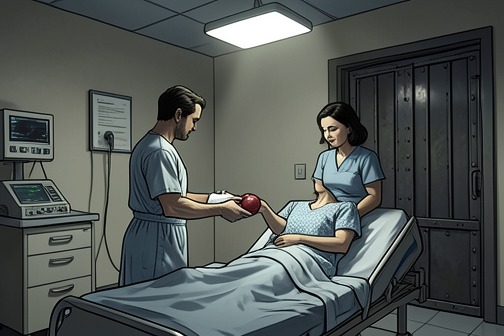
[Jensen Brick McCall](entity:character-recall-character-jensen-brick-mccall-7d329989a38d)’s kidney donation to [Gloria Simpson Picou](entity:character-recall-character-gloria-simpson-pico-c2c5b2d8d48f) reverses his earlier refusal to help the mother who abandoned him at birth. The transplant is both a life-saving act and a decisive change in their relationship: by the novel’s [Christmas](entity:time-recall-time-0cffe7da2c4d) epilogue, [Gloria](entity:character-recall-character-gloria-74d2fbb2cafc) is part of Jensen’s family, and he understands his survival as bound up with the family he has since built.
## Background and Stakes
Jensen’s connection to Gloria begins with abandonment, not care. In his account of his origins, he is the surviving baby born after a late-term abortion; the young mother refuses to take him home, and the nurse who later becomes his adoptive mother names him Jensen Brick McCall. That beginning gives the later transplant particular weight: the child whose life his birth mother rejected grows up to make a choice that helps preserve hers.
The immediate medical stakes emerge when Mama Pearl tells Jensen that Gloria needs a kidney transplant and that the bills are extremely high. She argues that helping is the right thing to do and suggests that doing good might help Gloria see Jensen. Her appeal places the choice at the intersection of medical need, family obligation, and a history of being denied recognition.
## Refusal and Reversal
Jensen initially rejects Mama Pearl’s request. He points out that Gloria has not treated him as her son and would not acknowledge him when he was sitting in front of her. His refusal is rooted in a specific injury: donating to someone who has withheld the relationship itself seems to ask him to accept a one-sided version of family duty.
Mama Pearl does not erase that grievance. She acknowledges that the request is difficult and asks him to consider whether doing good might change how Gloria sees him. The later donation makes Jensen’s eventual decision a reversal, but not proof that the original abandonment did not matter. Rather, the contrast between his protest and his later action makes the donation an act of choice rather than an obligation he never questioned.
## The Donation and Its Consequences
The epilogue confirms that Jensen gives Gloria his kidney. He explains the practical consequence in terms of the family’s future: the transplant allows her to watch his younger brother and sister grow up. The account does not describe the operation itself; it presents the donation through what it makes possible, shifting attention from the medical procedure to the life and relationships it helps sustain.
The transplant also changes the place Gloria occupies in Jensen’s life. At a Christmas gathering one year later, he calls her his mother and reflects that the person who tried to take his life now understands why he survived. In the same scene, he sits at the head of a family table and says that he has a family. The donation is thus followed by a visible, domestic form of inclusion rather than an isolated medical resolution.
## Family and Narrative Significance
Jensen’s decision does not stand alone as a reconciliation scene. It belongs to an ending in which he is also a husband and father: on [Christmas Day](entity:time-recall-time-christmas-day-08a71908c479), [Janae Morrison](entity:character-recall-character-janae-morrison-a60d65b6df7c) gives birth to their daughter, [Grace](entity:character-recall-character-grace-f21f0fdf609d) Pearl McCall, while Jensen describes the family gathered around him. Gloria holds her great-granddaughter and places a small piece of crystal around the baby’s neck, continuing a tradition for each grandchild. These concrete acts show Gloria participating in the family she once denied Jensen.
The donation recasts the novel’s opening survival as an ongoing responsibility without making Jensen’s past disappear. He was once the abandoned infant whom another person chose to keep alive; now he chooses to help keep Gloria alive. The movement from refusal to donation, and from rejected son to acknowledged son, gives the transplant its decisive significance: it connects survival to forgiveness, while leaving the history that made forgiveness difficult in view.
Event 26
Jensen and Janae Become Parents

[Jensen and Janae Become Parents](entity:event-recall-event-jensen-and-janae-become-7d0160e2988b) is the [Christmas Day](entity:time-recall-time-christmas-day-08a71908c479) birth of Janae and Jensen’s daughter, [Grace](entity:character-recall-character-grace-f21f0fdf609d) Pearl McCall. It fulfills the couple’s hope of building a family and places Jensen, once the only baby to survive a botched abortion, at the head of a loving household of his own.
## From Expectation to Parenthood
Before the birth, Janae describes wanting to reach out to her mother and sister and apologize, while accepting that she may love them from a distance. Her pregnancy gives that wish a new context: she is about to become a mother herself. [Inya](entity:character-recall-character-inya-814dd63df1fc) responds physically to the news, jumping up and placing a hand on Janae’s belly; Janae then asks Inya to be the baby’s godmother, despite recognizing the boundary between counselor and patient.
Jensen’s own acknowledgment of impending fatherhood comes in a brief exchange. When asked whether he is going to be a daddy, he answers that he knows, then jokes that one is down and four more to go. The moment joins his humor to a future he once could not have expected: not merely surviving, but imagining a family large enough to include more children.
## The Christmas Day Birth
The narrative marks a one-year passage before the birth. On Christmas Day, Janae gives birth to Grace Pearl McCall. The account identifies Janae as Jensen’s wife and presents their daughter’s arrival as the beginning of a family, not simply as the conclusion of the pregnancy announcement.
The child’s name carries particular resonance beside Jensen’s history. At birth, he was the brown baby who continued breathing after eight hours, when the other infants on the table had died; Grace, who had helped save him, later told him that his survival had a purpose. Now Jensen and Janae welcome a daughter into a life he once questioned whether he was meant to have. The narrative does not state why they chose the name Grace Pearl, so the name’s echo of Grace remains a resonance rather than a confirmed explanation.
## A Family Around the Newborn
The birth is followed by a family gathering in which Jensen sits at the head of the table. He describes Janae as his wife, best friend, and family, and calls the room one of love. The scene also shows how far his relationship with [Gloria](entity:character-recall-character-gloria-74d2fbb2cafc) has changed: the woman he calls his murderer is now his mother, and Jensen says he gave her a kidney so she could watch his younger brother and sister grow up. The family tableau therefore places the newborn amid reconciliations and relationships that have been painfully remade, rather than presenting parenthood as an isolated happy ending.
[Ginger Pearl](entity:character-recall-character-ginger-pearl-45f9b0032307) holds her great-granddaughter and rocks her in her arms. She places a small piece of crystal around the baby’s neck, continuing a tradition she follows for every grandchild. The gesture carries a family practice forward to a new generation, connecting the newborn to a kinship network that Jensen himself had once lacked.
## Significance
The birth reverses the terms of Jensen’s beginning. He entered the story as an infant expected to die, saved by Grace’s decision to protect him; he now becomes a father in a family gathered around a child who is welcomed and named. His survival is no longer only a question he asks himself or a purpose Grace insists he has. Parenthood makes that survival part of a continuing family history.
The Christmas Day scene also brings the book’s language of life and love into concrete form: a wife, a daughter, a table full of family, and a grandmother holding her great-grandchild. The ending does not erase the deaths, abandonment, addiction, or conflict that preceded it. Instead, it places the new family beside those histories and shows that Jensen and Janae have built a future in their aftermath.
Event 27
The McCall Family Christmas Reunion

[The McCall Family Christmas Reunion](entity:event-recall-event-the-mccall-family-chris-baa0ed87ab30) is the novel’s closing family gathering, where a [Christmas](entity:time-recall-time-0cffe7da2c4d) birth, an embrace, and a group photograph bring [Jensen Brick McCall](entity:character-recall-character-jensen-brick-mccall-7d329989a38d)’s long history of abandonment and loss to a provisional resolution. One year after the preceding events, Jensen sits at the head of a family table with [Janae Morrison](entity:character-recall-character-janae-morrison-a60d65b6df7c), their newborn daughter, his mother, and other relatives. The scene makes survival visible not as solitary endurance but as a family assembled across old wounds.
## A Family Gathered at Christmas
One year later, on [Christmas Day](entity:time-recall-time-christmas-day-08a71908c479), Janae gives birth to [Grace](entity:character-recall-character-grace-f21f0fdf609d) Pearl McCall. Jensen names Janae as his wife and best friend, and describes the arrival of their daughter as the moment he has a family. The gathering takes place around a table, with Jensen at its head; its ordinary domestic setting gives weight to a life that once seemed defined by being unwanted and alone.
The reunion is lively rather than ceremonious. Jensen is called outside to help his stepfather and an uncle, while [Carl](entity:character-recall-character-carl-253c86b9cb77)’s barbecue is part of the meal. [Thomas](entity:character-recall-character-thomas-96b965fcdef2) jokes that their mother drove Carl crazy, and she answers by raising her middle finger at him. She then boasts about her husband’s love and challenges her brother to a game of spades. The teasing and bickering present kinship as an everyday practice, not a flawless arrangement.
## Repaired Bonds and New Generations
Jensen’s mother embraces him while Janae gets the camera ready. [Ginger Pearl](entity:character-recall-character-ginger-pearl-45f9b0032307) holds her great-granddaughter and rocks her in her arms, continuing her custom of placing a small crystal around each new grandchild’s neck. The gestures connect generations in the same room: the newborn is welcomed by the grandmother and great-grandmother, while Jensen is physically embraced by the mother whose rejection once shaped his life.
The reunion also reflects the scale of that earlier rupture. Jensen was born alive after a failed late-term abortion, and his birth mother, [Gloria](entity:character-recall-character-gloria-74d2fbb2cafc) Simpson Picoult, had expressed fear that her baby might be dark-skinned. Later, Janae describes the enduring harm of colorism and the burdens placed on dark-skinned women. Against that history, the Christmas gathering does not erase the past; it places the previously rejected child and his mother within a family that now includes his wife and daughter.
## Survival Made into Belonging
Jensen says that he gave his mother a kidney so she could watch his brother and sister grow up. The donation gives their reconciliation a concrete consequence: the relationship once marked by an attempt to let him die has become one in which he helps preserve her life and her place in the family. In Jensen’s account, his mother now understands why he survived, turning the reunion into an answer to the question that has driven his search for purpose.
The family gathers around Ginger Pearl for a photograph, smiling together. Jensen calls this family his own, while acknowledging that it is not perfect. That qualification matters: the ending offers neither an immaculate past nor a claim that every hurt has vanished. Instead, the final image makes a more grounded promise—Jensen has people who love him, a daughter whose life begins within that circle, and a place at the table he once could not expect to have.
## Narrative Significance
The Christmas reunion completes the book’s movement from abandonment toward chosen and repaired family ties. Its closing details—the barbecue, the card-game challenge, the embrace, and the family selfie—give the resolution a domestic scale. The story’s repeated language of survival is answered not by a grand public triumph but by the sight of several generations gathered together. Jensen’s declaration that he is still here becomes inseparable from the family that surrounds him.